What's inside
- Contents
- Why a Ramp Instead of Jumping
- Styles: Folding, Fixed, Telescoping and Low-Rise
- Sizing a Ramp to Your Dog
- Traction and Surface Materials
- Wood, Hardware and Construction Quality
- Weight Capacity and Stability
- Training Your Dog to Use a Ramp
- Building a Ramp Yourself
- Comparison Table
- Buyer Checklist
- Mistakes to Avoid
- Safety and Supervision
- Frequently Asked Questions
- Bottom Line
As an Amazon Associate I earn from qualifying purchases. This post may contain affiliate links at no extra cost to you.
The short answer: the best wooden dog ramps are stable, wide enough for your dog to walk comfortably, rated for more than your dog weighs, and covered in a grippy surface that stays grippy when wet. Choose the gentlest slope your space allows, because a longer ramp is easier on a dog than a short, steep one. A folding model suits trips in the car, a fixed one suits a deck or doorway, and a low, broad piece suits a bed or sofa. If your dog has any trouble walking, ask your vet before choosing, and always supervise the first uses.
This guide does not rank products or invent specifications. It explains the styles, how to size a ramp to your dog, what to look for in traction and construction, how to build one if you enjoy the workshop, and the mistakes that make ramps unsafe or unused. Check current listings and manufacturer instructions before you buy, since details change.
Contents
- Contents
- Why a Ramp Instead of Jumping
- Styles: Folding, Fixed, Telescoping and Low-Rise
- Sizing a Ramp to Your Dog
- Traction and Surface Materials
- Wood, Hardware and Construction Quality
- Weight Capacity and Stability
- Training Your Dog to Use a Ramp
- Building a Ramp Yourself
- Comparison Table
- Buyer Checklist
- Mistakes to Avoid
- Safety and Supervision
- Frequently Asked Questions
- Bottom Line
Our Top Picks
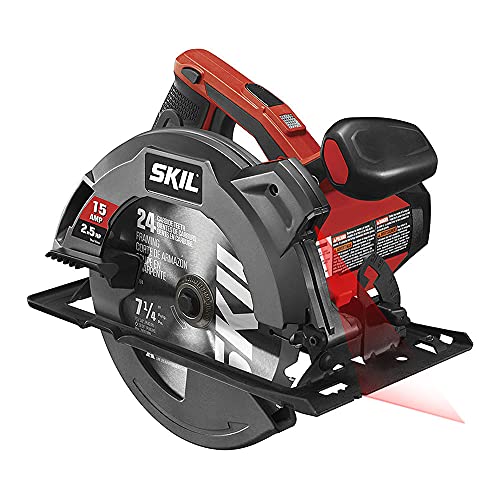 SKIL 15 Amp 7-1/4 Inch Circular Saw with7-1/4 Inch (Pack of 1)14.2 x 9.8 x 8.5 inches8.7 poundsCheck on Amazon
 SKIL 5” Random Orbital Sander with Cyclonic Dust5 inches7.87 x 4.8 x 5.51 Inches3.44 poundsCheck on Amazon

Contents
- Why a ramp instead of jumping
- Styles: folding, fixed, telescoping and low-rise
- Sizing a ramp to your dog
- Traction and surface materials
- Wood, hardware and construction quality
- Weight capacity and stability
- Training your dog to use a ramp
- Building a ramp yourself
- Comparison table
- Buyer checklist
- Mistakes to avoid
- Safety and supervision
- Frequently asked questions
- Bottom line
Why a Ramp Instead of Jumping
Dogs leap into vehicles, onto beds and down steps without a second thought, and many owners start looking at ramps when a pet hesitates, when a dog grows larger or older, or when a short-legged breed is expected to climb something taller than is comfortable. A ramp replaces repeated jumping and lifting with a walkable path, which can be easier for the dog and for your back.
It is worth being clear about what a ramp is. It is a convenience and a support for everyday access. It is not medical equipment, and it will not treat or cure anything. If your dog limps, stiffens, avoids movement or struggles to rise, speak to your vet before choosing equipment, because the right answer may depend on a diagnosis you cannot make from a product page.
Think about where the ramp will live. A car ramp has to be portable and light. A deck ramp lives outdoors and faces weather. A bed ramp sits on a floor, often carpet or hardwood, so it needs a base that will not slide. Each place sets different priorities, and the best choice rarely suits all three.
Styles: Folding, Fixed, Telescoping and Low-Rise
Folding ramps
A folding ramp has a hinge in the middle so it closes into a carry-friendly shape, often with a handle. It is the usual pick for car boots and SUV cargo areas. Check the hinge and the locking mechanism, since those parts take the load and the repeated movement. A ramp that does not lock firmly when open should not be used.
Telescoping ramps
Telescoping ramps slide out to a longer length and retract to a shorter one. They can adapt to different heights, which is useful if you use the ramp with more than one vehicle. The sliding joint is the thing to inspect, because play or rattling in the extension can mean a wobbly walking surface. Many are built from other materials than wood to stay light, so if you want solid timber, read descriptions carefully.
Fixed ramps
A fixed ramp is a single rigid piece, sometimes with side rails. It is typically sturdier and quieter underfoot than a hinged one, and it suits permanent spots such as a porch step, a doorway or a deck edge. Because it does not fold, it takes more storage space when not needed.
Low-rise and bed ramps
These are shorter, broader and often carpeted, designed for furniture rather than vehicles. Because furniture height is modest, a good bed or sofa ramp can still offer a gentle slope. Look for a footing that grips the floor and a top edge that sits firmly against the furniture without shifting.
Sizing a Ramp to Your Dog
Sizing starts with three measurements you can take yourself: the height your dog must climb, the space available for the ramp along the floor, and your dog’s body. Never rely on a number someone else gives you without checking it against your own situation.
Length and slope. The longer the ramp relative to the height, the gentler the slope. A steep ramp is harder to climb and more likely to be refused, so choose the longest ramp that fits your space and storage. Small dogs, senior dogs and long-backed breeds generally do best with the gentlest slope you can manage.
Width. The surface should be wide enough that your dog can walk with its feet fully on the ramp rather than perched near an edge. Large or broad-chested dogs need more width than small ones. If you have two dogs who like to go together, avoid squeezing them onto a narrow ramp.
Rails and edges. Low side rails help nervous dogs keep their line, though they are not a substitute for supervision. Make sure rails do not trap a paw or leg and that edges are rounded.
Dog size and build. Small breeds may need a lower, shorter ramp that is easy to step onto. Big dogs need more width, stronger materials and a higher rated capacity. A dog with a heavy chest or a long back often benefits from a longer ramp, while a nimble, athletic dog may cope with a steeper one. Observe your own dog and decide from what you see.
Traction and Surface Materials
Slippery footing is the quickest way to make a ramp frightening. Bare, varnished or wet timber can be like glass under claws and paws, so the surface treatment is as important as the wood itself.
Common options include carpet-style covering, rubberized coating, textured grit and cross-battens. Carpet is soft and warm but holds dirt and can become slick when soaked, so it suits indoor or under-cover use. Grit coatings give strong grip but can feel rough on paws and wear down, so check how they are rated and whether they are gentle on pads. Rubber tends to hold up outdoors and wipes clean, but may get slippery when covered in mud or ice.
Whatever the surface, look at the base too. The feet or end pieces should not slide on your floor, vehicle bumper or deck. Rubber feet and a stable lip at the top make a real difference. If you are adding your own traction, use a product intended for the purpose, apply it evenly right to the edges, and test it by walking the ramp yourself in socks before your dog tries it. Browse non-slip grip tape or a rubber traction mat if your current surface needs help.
Wood, Hardware and Construction Quality
Wood gives a ramp a solid, quiet feel that many dogs find reassuring. It is also repairable, and you can sand rough patches or replace worn grip. What matters is how it is built. Look for a sturdy frame under the walking surface rather than a thin panel that flexes in the middle. Check that joints are tight, that fasteners sit flush, and that there are no splinters or exposed screw tips.
Outdoor ramps need protection from moisture. Wood that stays wet can swell, rot or become slippery with algae, so look for appropriate sealing and keep an eye on the edges and underside. If you apply a finish yourself, choose one that the maker states is suitable for use around pets, and let it cure fully before your dog goes near it.
Hardware deserves attention. Hinges, latches, handles and top-end hooks or lips carry stress. Look for sturdy fittings with no wobble, and treat any sign of bending or loosening as a reason to stop using the ramp until it is repaired or replaced.
Weight Capacity and Stability
Every ramp should state a maximum load. Choose one comfortably above your dog’s weight so you are not operating at its limit, and remember that a dog walking or bounding up applies more force than one standing still. If a listing does not state a capacity, treat that as a warning and look elsewhere. Check the current specification each time, as designs and ratings change between versions.
Stability is separate from capacity. A ramp can be strong yet still slide, tilt or rock. Test it empty by pushing on it. At the top, it should rest securely on the vehicle floor, bed frame or deck, not just touch it. At the bottom, it should sit flat on stable ground. On uneven surfaces such as gravel or grass, consider whether a different solution would be safer.
Training Your Dog to Use a Ramp
Many dogs are wary at first. Introduce the ramp in a calm place, with the ramp laid flat or very low, and let your dog investigate it. Reward calm steps with treats and praise, and let your dog set the pace. Gradually raise the angle as confidence builds. Do not push, pull or force a nervous dog onto a ramp, which can create fear that lasts.
Use a leash if it helps you guide movement, but keep it loose, so the dog is not pulled off balance. Keep early sessions short and finish on a success. A few calm repetitions across several days usually beat one long attempt.
Building a Ramp Yourself
A simple fixed ramp is a good beginner woodworking project. Use sturdy lumber for the frame and a continuous deck for the walking surface, add a stop or lip at the top, and finish with a traction layer. Plan the length from the height and space you have, then add rails if you want them. Keep every joint tight, countersink fasteners and sand all edges smooth.
Build quality counts more than looks, and a ramp that carries a living animal deserves caution. If you are not confident about structure, ask an experienced builder to review your plan or choose a ready-made ramp with a stated capacity. A circular saw, a set of bar clamps and a random orbit sander cover most of the work. Wear eye and ear protection and follow each tool’s manual.
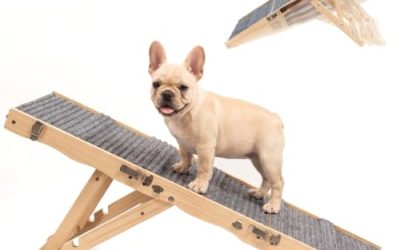
If you would rather buy, look at folding wooden dog ramps and compare their listed lengths, widths, capacities and traction surfaces against your needs.
Comparison Table
| Style | Best use | Strengths | Watch for |
|---|---|---|---|
| Folding | Car or SUV loading | Portable, stores compactly | Hinge and lock quality |
| Telescoping | Multiple vehicles or heights | Adjustable length | Play in the sliding joint |
| Fixed | Porch, deck or doorway | Sturdy and quiet | Storage space and weather exposure |
| Low-rise | Bed or sofa | Gentle slope, soft surface | Base grip and top-edge stability |
| Railed | Nervous or wobbly walkers | Helps keep a straight path | Rails must not trap paws |
| DIY fixed | Custom heights and spaces | Fits your exact situation | Structure and traction are on you |
Buyer Checklist
- Have you measured the height your dog must climb and the floor space available?
- Does the stated weight capacity comfortably exceed your dog’s weight?
- Is the slope as gentle as your space allows?
- Is the walking surface wide enough for your dog’s feet and body?
- Is the traction surface grippy, gentle on paws and suited to wet conditions?
- Do the feet and top edge hold firm against the floor, bumper, bed or deck?
- Do hinges and locks engage fully and without wobble?
- Is it light enough for you to carry and store safely?
- Are edges rounded, with no splinters or exposed fasteners?
- Have you read current specifications and instructions, and asked your vet if your dog has mobility concerns?
Mistakes to Avoid
The biggest mistake is choosing a ramp that is too short. It looks tidy, but the steep angle makes dogs hesitate, slip or refuse. Go longer if you can.
Another is ignoring the weight rating or buying right at the limit. A dog that bounds or hurries puts extra force on the structure, so leave generous margin.
People also assume wood is automatically grippy. Smooth timber can be treacherous, particularly after rain or on a polished finish. Add a suitable surface and check it periodically for wear.
Skipping training is a common trap. A dog that is picked up and placed on a ramp may panic and never trust it again. Introduce it gradually, with rewards.
Leaving a ramp in place without securing the top is another. Even a stable ramp can shift if the vehicle moves, the bed frame slides or a deck board flexes. Check the connection each time.
Finally, do not treat a ramp as a replacement for veterinary advice. If your dog is reluctant to climb, appears uncomfortable, or has trouble rising, talk to your vet and follow their guidance on equipment.
Safety and Supervision
Supervise every use, especially early on. Stay beside the ramp, keep your hands free, and be ready to steady the dog without grabbing suddenly. Do not let a dog use a ramp unattended until you are confident about its stability and the dog’s habits.
Inspect before each use. Look for cracks, loose screws, splitting edges, worn traction and wet or icy patches. Do not use a ramp that is damaged, wobbles or fails to lock. Keep the surface clear of mud, leaves, snow and spills, and dry it if it is wet.
Never exceed the stated weight capacity and never let multiple dogs rush up together unless the ramp is explicitly designed for that. Be careful near roads: attach the ramp securely to a stationary vehicle, and keep your dog leashed or under control near traffic. For puppies, seniors, dogs with joint or back problems, or anything affecting walking, ask your vet which approach suits that individual dog before you rely on a ramp.
Frequently Asked Questions
How long should a dog ramp be?
As long as your space and storage allow, because length gives a gentler slope. Measure the height your dog must climb and compare it with the listed ramp length.
How do I know the right width?
Your dog should be able to walk with all four paws on the surface comfortably. Large or broad dogs need more width than small ones, so watch how yours moves.
Is a ramp better than stairs?
It depends on the dog and the space. Many owners find ramps easier for small or long-bodied dogs, while others prefer steps. If mobility is a concern, ask your vet.
What makes a ramp non-slip?
A traction surface such as textured coating, rubber or carpet-style covering, plus feet that grip the floor. Check how it behaves when wet and replace worn grip.
Can a wooden ramp stay outside?
Some can, if sealed properly and kept maintained, but moisture, rot and slippery algae are real concerns. Follow the maker’s care instructions and inspect regularly.
How do I get a nervous dog to use a ramp?
Go slowly. Start with the ramp low and flat, reward small steps, never force the dog, and raise the angle as confidence grows.
What weight capacity should I choose?
Pick one clearly above your dog’s weight, and check the current specification on the listing. If no rating is stated, choose a different product.
Should I ask a vet before buying?
Yes, if your dog is old, very young, injured or shows any difficulty walking. Your vet can advise on what suits your individual dog.
Bottom Line
Aim for a long, stable, well-gripped ramp with a clear weight rating, matched to the place you will use it. Introduce it patiently, supervise every trip and inspect it often. Compare current listings and instructions with your own measurements, and involve your vet whenever mobility is a worry.
Disclosure: As an Amazon Associate, we earn from qualifying purchases. Links marked as sponsored may earn us a commission at no extra cost to you.
Related guides
More from Amazon
Programs that pair well with the guide above. Offers and eligibility are set by Amazon and may change.
A free business account with business pricing and bulk-buying tools for work, shop or home office.
Create a business accountFree shipping on eligible items, Prime Video and more. Eligible new members can start with a free trial.
Start a Prime free trialAudiobooks and podcasts to listen to on the go. Eligible new members can start with a free trial.
Try Audible freeAd-free music streaming. Eligible new subscribers can start with a free trial.
Try Music Unlimited freeAs an Amazon Associate we earn from qualifying purchases.