What's inside
- Contents
- Why Choose Wood
- Gate Types and Where They Work
- Measuring Your Opening
- Matching a Gate to Your Pet
- Latches, Doors and Hardware
- Stairs, Doorways and Wide Openings
- Installing a Gate Step by Step
- Building Your Own Wooden Gate
- Comparison Table
- Buyer Checklist
- Mistakes to Avoid
- Safety and Supervision
- Frequently Asked Questions
- Bottom Line
As an Amazon Associate I earn from qualifying purchases. This post may contain affiliate links at no extra cost to you.
The short answer: the best wooden pet gates are the ones that fit your opening snugly, latch in a way your pet cannot work out, and are mounted the right way for where they sit. For a doorway between rooms, a pressure-mounted or freestanding gate is often enough. For the top of a staircase, a hardware-mounted gate fixed into solid framing is the safer category to consider. Slat spacing, gate height compared with your pet’s size and jumping habits, and an easy walk-through door for you all matter more than the finish. Check current instructions for each gate and never leave pets unsupervised behind a gate until you have checked how it holds up.
This guide does not rank products or quote invented dimensions. It explains each gate type, how to measure, how to match a gate to a cat, a small dog or a determined large dog, how to install it properly, and the mistakes that lead to escapes or injuries. Compare current listings and manufacturer instructions before you buy.
Contents
- Contents
- Why Choose Wood
- Gate Types and Where They Work
- Measuring Your Opening
- Matching a Gate to Your Pet
- Latches, Doors and Hardware
- Stairs, Doorways and Wide Openings
- Installing a Gate Step by Step
- Building Your Own Wooden Gate
- Comparison Table
- Buyer Checklist
- Mistakes to Avoid
- Safety and Supervision
- Frequently Asked Questions
- Bottom Line
Our Top Picks
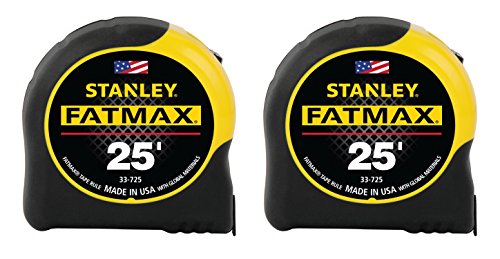 Stanley FMHT74038A FatMax 25 Foot Tape Measure 2PK7.6 m5.13 x 3.38 x 3.63 inches1.2 PoundsCheck on Amazon
 Klein Tools 935RBP Pitch Vial Torpedo Level with8-Inch Pitch Vial Torpedo8 x 0.75 x 0.1 inches0.42 poundsCheck on Amazon


Contents
- Why choose wood
- Gate types and where they work
- Measuring your opening
- Matching a gate to your pet
- Latches, doors and hardware
- Stairs, doorways and wide openings
- Installing a gate step by step
- Building your own wooden gate
- Comparison table
- Buyer checklist
- Mistakes to avoid
- Safety and supervision
- Frequently asked questions
- Bottom line
Why Choose Wood
A wooden gate blends with furniture, trim and flooring in a way that plain metal or plastic often does not. For households that keep a gate in a living area for years, appearance counts. Wood is also rigid, which gives a calm, solid feel, and many wooden designs can be sanded, touched up or repaired, so a scratched panel does not mean replacing the whole gate.
There are trade-offs. Wood can be heavier, which makes it less convenient to move between rooms. Chewers can damage it, particularly puppies and bored dogs that fixate on a bottom rail. Finishes can wear where claws and paws scrape, and splinters are possible if the surface is neglected. Those points do not rule wood out. They simply mean you should look for smooth finishing, check the gate regularly and think carefully about your pet’s habits.
Be realistic about what a gate does. It is a barrier that influences where your pet goes, not a guarantee. A confident jumper, a clever climber or a strong dog leaning on a flimsy panel can all defeat a poor choice. Match the gate to the animal, not to the room alone.
Gate Types and Where They Work
Pressure-mounted gates
These hold in place by pushing outward against the sides of the opening, usually with adjustable screws or knobs, and do not drill into your frame. They are popular for renters and for moving between rooms. Their weakness is that the grip depends on correct adjustment, and a determined pet or a strong shove can loosen them. Read the manufacturer’s guidance carefully about where they may and may not be used, and do not assume they are suitable for stairs.
Hardware-mounted gates
These attach to the wall or door frame with screws and hinge brackets. They are generally steadier, they swing open like a door, and they suit high-risk spots when installed into solid framing and used as the instructions direct. The cost is a set of holes in your trim, which you may need to patch later.
Freestanding gates
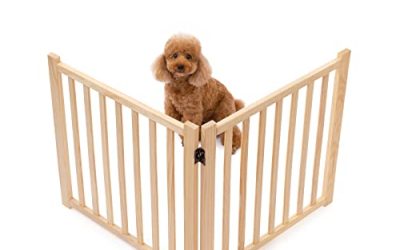
Freestanding gates are folding or zigzag panels that stand on their own feet. They are flexible, since you can reshape them to block corners, fireplaces or odd gaps, and nothing is attached to the house. They are better as a visual barrier for calm pets than as a firm restraint, because a pushy dog can slide or topple them, and you generally cannot rely on them near stairs.
Walk-through and swing gates
Many gates include a small door so you can pass without lifting the whole unit. That feature makes daily life easier, particularly when you carry laundry or hold a child. Check how the latch works and whether the door swings in both directions, since a gate that swings over a stair edge is a trap.
Pet-door gates
Some gates include a small cat-sized opening so a cat can pass while a dog remains blocked. Match the opening to your cat’s size and ensure a determined dog cannot squeeze through it, because the opening is also the weakest point.
Measuring Your Opening
Poor measuring is the biggest cause of returns. Measure the width of the opening at several heights, because walls and trim are rarely perfectly straight, and use the narrowest and widest readings when you compare against the gate’s listed range. Note baseboard thickness, since some gates must clear it, and check whether anything protrudes into the opening, such as a door stop or a banister post.
Many gates cover a limited range of widths, so you may need extensions for wider openings. Use only the extensions made for your specific gate, and keep the listing’s guidance on maximum combined width in mind. Check current specifications on the product page rather than guessing.
Write down your measurements and take them to the listing. A reliable tape measure kept with the gate’s paperwork lets you recheck whenever you adjust.
Matching a Gate to Your Pet
Cats. Cats climb and jump, so height and surface matter. A cat can scale a gate with horizontal rungs, so vertical slats are usually harder to climb. A cat may squeeze through any gap that its head and shoulders fit through.
Small dogs and puppies. Look closely at the spacing between slats and at the gap beneath the bottom rail. A small head or body can slip through gaps that suit larger animals. Puppies also chew, so smooth, well-finished wood and rounded edges are preferable.
Medium dogs. Many are happy to be blocked by a solid, reasonably tall gate, but some will jump if they are fit and motivated. Watch how yours behaves with an obstacle before you decide on height.
Large or athletic dogs. These pets can lean on, push or clear a gate that works fine for smaller animals. Prioritize a taller, sturdier, hardware-mounted option and check the weight and use guidance from the maker. A gate that wobbles when you push it will wobble when your dog does.
Seniors and pets with mobility problems. A high threshold or a bottom bar to step over can be awkward for an older animal. If your pet has trouble moving, ask your vet which arrangement is safest, and consider a gate that opens fully rather than one that must be stepped over.
Latches, Doors and Hardware
The latch is where gates succeed or fail. A smart pet can learn to nose open a simple lever, and a child can accidentally leave a gate ajar. Look for latches that need a deliberate action and, ideally, that click shut by themselves. Test it one-handed, because you will often be carrying something.
Check the hinges for smooth, solid movement and make sure the door closes fully every time. Gates that slowly drift open, or catch halfway, create a false sense of security. Examine the brackets and screws for sturdiness, and replace any that bend or strip. Some gates have a stop that prevents the door swinging beyond a certain point, and that is worth having near stairs.
Also look at the threshold. A bar across the floor stops a tidy sweep and can trip people, whereas a gate with no bottom bar is easier to walk through but leaves a gap that small pets might exploit. Choose whichever suits your household, and decide with eyes open.
Stairs, Doorways and Wide Openings
Top-of-stairs gates deserve special attention. A gate placed at the top of a staircase must withstand a pet or a child leaning on it, and a mistake there can have serious consequences. In general, look for a hardware-mounted gate installed into solid framing, with a latch that opens away from the stairs or does not swing over them. Follow the gate’s instructions and, where uncertain, ask a professional to check the installation.
Doorways between rooms are the easiest case. Pressure-mounted or hardware-mounted gates are both usable there if they fit well.
For wide openings, such as the entrance to an open-plan living area, look at extra-wide gates or modular panels designed for the purpose. Large spans magnify any flex, so a sturdy frame and secure anchoring matter. If you cannot find a wooden gate that meets your needs, consider whether a custom build or a different type of barrier would work better.
Installing a Gate Step by Step
Always follow the instructions that come with your gate, since mounting details differ. The general sequence is similar, though.
- Check the opening again against the gate’s stated width range and note anything that might interfere.
- Decide which way the door should swing and, for stairs, make sure it opens onto the landing, not over the steps.
- For hardware-mounted gates, locate solid framing with a stud finder, mark your positions with a level, and drill pilot holes before driving screws. A stud finder and a torpedo level make this easier.
- For pressure-mounted gates, adjust the contact points evenly so the gate sits square, then tighten fully as instructed.
- Test the latch several times, and push firmly on the gate from both sides to check for movement.
- Watch your pet’s first interactions and adjust if anything rattles, shifts or can be nudged open.
Revisit the fixings from time to time. Wood shrinks and expands with the seasons, and screws can work loose.
Building Your Own Wooden Gate
If you have workshop skills, a custom gate can solve an awkward opening that ready-made products miss. A basic design uses a stout frame, vertical slats, a hinged section and a secure latch. Keep slat spacing narrower than the smallest pet’s head and consider a small gap at the base, not too large for the smallest animal. Sand every surface, round all edges and finish with something described as pet-safe, allowing it to cure and air out.
Structure comes first. Use sound lumber, glue and fasten joints well, and test the gate under a firm push before trusting it. A pocket hole jig gives strong frame joints with simple tools. If the gate will guard stairs, think seriously about whether a ready-made gate made for stairs is the safer pick. For ready-made options, compare wooden pet gates and read the specification and installation guidance for each one.
Comparison Table
| Gate type | Mounting | Good for | Cautions |
|---|---|---|---|
| Pressure-mounted | Pushes against frame, no drilling | Doorways, renters, room-to-room use | Can loosen; check suitability for stairs |
| Hardware-mounted | Screwed into wall or frame | Stairs and high-risk spots | Leaves holes, needs solid framing |
| Freestanding | Stands on feet | Corners, odd gaps, calm pets | Can slide or tip, not for stairs |
| Walk-through | Either mounting method | Daily household traffic | Latch quality and swing direction |
| Extra-wide | Usually hardware or modular | Open-plan entries | Flex across long spans |
| Gate with pet door | Either mounting method | Households with cats and dogs | Small opening can be a weak point |
Buyer Checklist
- Have you measured the opening at several heights and compared it with the listed width range?
- Is the mounting style appropriate for the location, especially at stairs?
- Is the gate tall enough for your pet’s size and jumping habits?
- Are slats close enough together to stop heads, paws and bodies getting through?
- Is the bottom gap suitable for your smallest pet?
- Does the latch need a deliberate action and close reliably?
- Is the finish smooth, with no splinters, sharp edges or loose parts?
- Does the door swing away from stairs and stay open or closed as intended?
- Can you open it comfortably with one hand?
- Have you checked the current instructions and specifications before ordering?
Mistakes to Avoid
Using a pressure-mounted gate at the top of stairs is the classic error. Many makers advise against it, so read the instructions and choose a mounting method intended for that location.
Buying by width alone is another. A gate that technically spans the opening may still be too short for a jumper or have slats too wide for a puppy.
Many owners forget the latch. A gate with a lever any clever nose can flip is only a suggestion. Test it with your own pet watching.
Skipping the wobble test is also common. Push the gate firmly in both directions after installation, and again after a few weeks.
Leaving chew-prone pets alone with a wooden gate invites damage and swallowed splinters. Provide appropriate chew toys, supervise, and inspect for damage.
Finally, avoid relying on a gate to confine an anxious pet. Pets in distress may try to jump, climb or force their way through, which creates injury risks. Address the underlying anxiety with advice from your vet or a qualified trainer.
Safety and Supervision
Supervise pets around any new gate until you trust it. Watch for climbing, jumping, chewing and attempts to squeeze underneath. Never leave a pet or child alone with a gate that is loose, damaged or incorrectly installed.
Check gates regularly. Look for loose screws, cracked wood, worn latches and wobble, and repair or replace anything questionable. Keep the area around the gate clear so pets cannot use furniture as a launch pad. Consider hazards on both sides, including cords, plants and medications that pets might reach once they are confined.
Pets can get a head, paw or collar caught in gaps, so measure spacing carefully and watch for danger. Do not use a gate designed for pets to protect against hazards for which it was never intended, such as pools or ovens, and do not treat it as a replacement for supervision around small children. For senior animals or those with mobility concerns, ask your vet whether a gate is appropriate and how it should be set up. When drilling or sawing during installation, wear eye protection and follow each tool’s instructions.
Frequently Asked Questions
Can I use a pressure-mounted gate at the top of the stairs?
Many manufacturers advise against it. Check the instructions for your specific gate, and consider a hardware-mounted model installed into solid framing for stairs.
How tall should a pet gate be?
Tall enough that your pet cannot easily jump or climb it. Observe your pet’s habits, and compare the listed height with its size before buying.
What slat spacing is safe?
Narrow enough that your smallest pet cannot get a head, paw or body through. Check the listing’s description and test with your animal’s size in mind.
Will wooden gates survive chewing?
Not always. Persistent chewers can damage wood, so provide chew toys, supervise, and inspect the gate for splinters or weakened parts.
Are freestanding gates good enough?
For calm pets and low-risk spots they can work. For strong dogs, stairs or busy households, a mounted gate is generally the steadier option.
How do I measure for an extra-wide gate?
Measure the opening at several heights, note obstacles, and compare with the maximum width in the listing. Use only extensions made for that gate.
Can a cat get past a wooden gate?
Many cats can jump or climb, especially over horizontal rungs. Vertical slats and a taller gate help, but supervise and adjust as you learn how your cat behaves.
Should I ask a vet before gating an older pet?
Yes, if your pet has trouble walking or stepping over barriers. Your vet can advise on what arrangement suits that animal.
Bottom Line
Choose the gate that fits the opening, suits the pet and uses the correct mounting for the location, with hardware mounting preferred for stairs. Test the latch, push on the panels and supervise early use. Verify current instructions on each product page, and ask your vet about any pet with mobility issues.
Disclosure: As an Amazon Associate, we earn from qualifying purchases. Links marked as sponsored may earn us a commission at no extra cost to you.
Related guides
More from Amazon
Programs that pair well with the guide above. Offers and eligibility are set by Amazon and may change.
A free business account with business pricing and bulk-buying tools for work, shop or home office.
Create a business accountFree shipping on eligible items, Prime Video and more. Eligible new members can start with a free trial.
Start a Prime free trialAudiobooks and podcasts to listen to on the go. Eligible new members can start with a free trial.
Try Audible freeAd-free music streaming. Eligible new subscribers can start with a free trial.
Try Music Unlimited freeAs an Amazon Associate we earn from qualifying purchases.