What's inside
As an Amazon Associate I earn from qualifying purchases. This post may contain affiliate links at no extra cost to you.
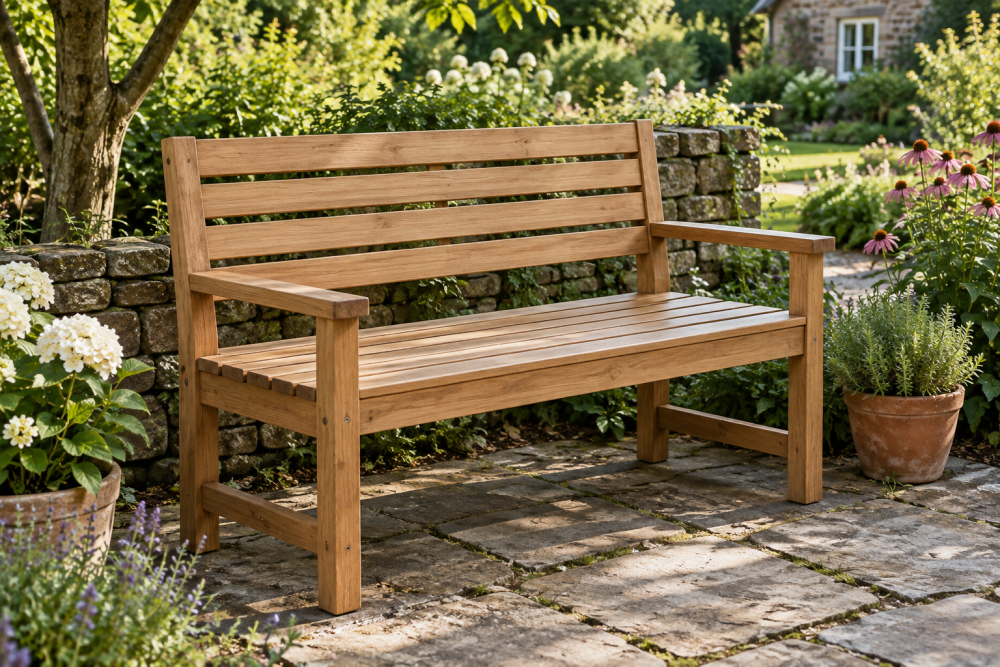
This compact cedar bench is sized for a balcony or small porch: about 42 inches wide, 16 inches deep, and 18 inches high. Its open slatted seat drains after rain, and the straightforward frame is manageable for a first-time builder with a saw and drill. Measure your space before buying lumber; allow a few inches behind the bench if you want room to sweep or reach a wall.
Contents
Plan the dimensions and gather materials
The finished seat is 42 by 16 inches. The frame sits 16 inches high, with 1-inch-thick seat boards bringing the total height to about 17 inches. Add 1-inch-thick feet or adjust the legs if you want to get closer to a standard 18-inch seat height. A seat between 16 and 18 inches is comfortable for most adults; taller cushions will raise it.
Buy cedar boards that are straight, dry, and free of large knots near the ends. For this plan, you need cedar in nominal 2-by-2 and 1-by-4 sizes, plus exterior-rated screws. Nominal sizes are larger than actual dimensions: a 1-by-4 usually measures about ¾ by 3½ inches. A cedar 1-by-4 lumber search can help compare availability, but local lumberyards may offer straighter boards and let you inspect them.
Cut list, using actual board dimensions:
- Four 2-by-2 legs, 15¼ inches long
- Two 2-by-2 long aprons, 39 inches long
- Two 2-by-2 end aprons, 13 inches long
- Six 1-by-4 seat slats, 42 inches long
The long aprons fit between the legs. The end aprons fit between the long aprons. This leaves a frame about 16 inches deep if your lumber measures 1½ inches square. Six seat slats, each about 3½ inches wide, span roughly 21 inches before spacing, so this cut list needs a correction for a 16-inch-deep seat: use four 1-by-4 slats instead. Four slats cover 14 inches, leaving about 2 inches total for gaps and edge margins. This narrower, open seat drains well and uses less material.
Tools and material choices
You can cut the stock with a circular saw and a square, though a miter saw makes repeated cuts quicker. A drill-driver, tape measure, clamps, and a countersink bit are useful. A stainless or coated exterior screw search is a practical starting point; avoid ordinary interior screws, which can rust and stain cedar.
| Choice | Best for | Trade-off |
|---|---|---|
| Stainless steel screws | Wet or coastal locations | Cost more, but resist corrosion well |
| Coated exterior screws | Most covered balconies and porches | Less expensive; coating can be damaged during driving |
| Clear penetrating outdoor finish | Keeping cedar closer to its original color | Needs periodic renewal |
| No finish | Low-maintenance, naturally weathered look | Cedar will gray outdoors and can develop surface checks |
Use 2½-inch screws for the frame and 1⅝-inch screws for the seat slats. Predrill cedar to reduce splitting, especially within an inch of a board end. A countersink keeps screw heads flush and helps avoid sharp edges.
Build a square frame
Cut the four legs and apron pieces to length. Check each cut with a square; small errors compound and can leave the bench rocking. Sand cut ends lightly to remove splinters.
Lay two legs on a flat surface and position a long apron between them. Set the apron’s top edge about ¾ inch below the tops of the legs, leaving room for the seat slats to overhang slightly. Clamp the pieces, drill two pilot holes through each leg into the apron, and drive the 2½-inch screws. Repeat for the second side.
Join the two side assemblies with the end aprons, again keeping their top edges level with the long aprons. Measure diagonally from corner to corner in both directions. If the measurements differ, push the longer diagonal inward until they match, then tighten the screws. A frame that is out of square makes the slats look uneven and may wobble.
Space and attach the seat slats
Set the frame on a level surface. Lay four 42-inch slats across it, with equal overhang at both ends—about 1½ inches if the frame is 39 inches wide. Leave ¼-inch gaps between slats for drainage. The four boards occupy 14 inches including three gaps, so center them across the 16-inch-deep frame and leave about an inch at the front and back.
Use a spacer cut from scrap wood to keep the gaps consistent. Drill two pilot holes at each slat-to-apron connection, then fasten each slat with 1⅝-inch screws. Drive screws straight and stop when the heads sit flush; overtightening can crush cedar fibers or split a slat. If a board cups, place its crown upward so the edges are less likely to hold water.
Finish, test, and maintain
Sand the seat and exposed corners with 120-grit paper, followed by 150-grit if you want a smoother surface. Do not round the legs so much that the bench loses a flat footing. Brush away dust and apply an outdoor finish only when the wood is dry and the forecast allows the product to cure. Follow the label for temperature and recoat times. Leaving cedar unfinished is fine if you accept a silver-gray color over time.
Set the bench on a flat surface and press down on each corner. If it rocks, check for a twisted board or uneven leg before trimming anything. Sit on it carefully and listen for movement; tighten loose screws, but do not assume this light-duty design is a step stool or a rated load-bearing seat for multiple adults. Keep it off standing water, and inspect screws and joints each spring. Recoat when water no longer beads on a finished surface, or leave it bare and replace any board that becomes soft or split.