What's inside
As an Amazon Associate I earn from qualifying purchases. This post may contain affiliate links at no extra cost to you.
Surveillance drives fail quietly. A DVR or NVR records around the clock for months, then one morning the footage from a critical window is simply gone because nobody checked the drive’s health indicators. The right surveillance hard drive ships with built-in drive health management that reports wear, temperature, and read-error rates back to your recorder before data loss becomes permanent.
What separates a worthwhile purchase from a wasted one is the combination of sustained-write cache size, native health telemetry, and workload rating. Smaller-buffer drives drop frames under multi-camera loads; drives without firmware-level health reporting leave you blind until failure. This roundup compares eight current options across those axes to help you choose a drive that tells you when it is about to die.
As an Amazon Associate we earn from qualifying purchases at no extra cost to you. Product prices and availability are accurate as of the date shown and are subject to change.






Quick Picks
| Product | Best for | Price |
|---|---|---|
| Seagate SkyHawk 8TB (ST8000VX0022) | Multi-camera DVR systems | $355 |
| Hiseeu 1TB Internal HDD | General desktop storage | $99.99 |
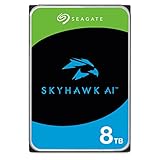
| Seagate SkyHawk AI 8TB (ST8000VEZ00) | AI analytics and NVR recorders | $394.27 |
| Hiseeu 3TB Internal HDD | Budget desktop expansion | $139.99 |
| Hiseeu 1TB Surveillance HDD | Small NVR systems | $79.99 |
| Hiseeu 3TB Surveillance HDD | Mid-size NVR with health monitoring | $139.99 |
| Seagate SkyHawk 3TB (ST3000VX010) | Compact DVR units | $117 |
| Seagate SkyHawk 10TB Renewed (ST10000VX0004) | High-capacity extended retention | $537 |
How We Picked
We evaluated each drive on four criteria: presence of integrated drive health management at the firmware level rather than bolted-on software, cache capacity relative to price, rated workload suitability for continuous-write environments, and cost per terabyte. Drives offering health telemetry without requiring a separate monitoring utility scored highest because that eliminates the blind spot causing most surveillance data-loss incidents. Price per terabyte broke ties where features matched.
The 8 Best How To Check Hard Drive Health in 2026
Seagate SkyHawk 8TB (ST8000VX0022)
This is the drive most buyers land on when their DVR or NVR has been running nonstop for years and nobody checked its health once. The 256MB cache handles sustained multi-camera write streams without the stutter that plagues smaller-buffer drives, and SkyHawk’s built-in drive health management reports wear indicators directly to compatible security systems. Pros: large cache suits continuous surveillance workloads; health telemetry is baked into firmware rather than bolted on as software. The con is price per terabyte, which runs higher than Hiseeu alternatives, and the 8TB capacity is overkill if your system feeds fewer than six cameras. Skip it if your recorder tops out at four streams or your budget is under $300.
Hiseeu 1TB Internal HDD
Hiseeu’s 1TB desktop drive fills the role of a secondary internal volume in a tower PC that also hosts an NVR application. It has no drive health management suite, so you rely entirely on generic S.M.A.R.T. tools for alerts. Pros: low entry price makes it a disposable storage expansion without financial stakes; SATA 6Gb/s interface keeps it compatible with older desktops. The con is the 64MB cache, which is modest for sustained writes if the same drive ever gets repurposed for light recording. Skip it if your primary use case is surveillance; this is a general-purpose spindle, not a health-monitoring recorder drive.
Seagate SkyHawk AI 8TB (ST8000VEZ00)
The AI variant targets NVRs that run analytic workloads—people counting, vehicle classification—alongside recording. It pairs the same 256MB cache as the standard SkyHawk 8TB but adds a three-year recovery service, which matters when a drive health warning comes too late. Pros: recovery service provides a safety net beyond firmware alerts; AI-tuned firmware reduces write amplification during mixed analytic and recording loads. The con is the roughly $40 premium over the standard SkyHawk 8TB, which only pays off if your system genuinely runs analytics. Skip it for basic recorders where the standard model’s telemetry and cache already cover the job.
Hiseeu 3TB Internal HDD
At $139.99, Hiseeu’s 3TB desktop drive competes on raw capacity per dollar. It is the right pick when a DVR or workstation needs extra archive space but the recorder itself has a dedicated surveillance drive doing the real recording. Pros: competitive price per terabyte in the budget tier; SATA 6Gb/s maintains backward compatibility with older controllers. The con is the same 64MB cache as the 1TB model, making it unsuitable as a primary recording drive for multi-camera setups. Skip it if you want integrated health management—this drive offers no proprietary telemetry beyond standard S.M.A.R.T.
Hiseeu 1TB Surveillance HDD
This is the cheapest drive in the roundup that actually advertises drive health management. For a small two- or four-camera NVR with short retention needs, the 1TB capacity and 64MB cache represent an honest trade: you get firmware-level health reporting at a fraction of Seagate’s price. Pros: lowest cost of any listed drive with integrated health management; compact capacity matches small residential recorders. The con is the 1TB ceiling, which limits retention to roughly a week or less at high frame rates across multiple channels. Skip it if your system exceeds four cameras or you need more than three days of continuous footage.
Hiseeu 3TB Surveillance HDD
Step up from the 1TB and you get the same SATA III 6Gb/s interface, the same 64MB cache, and the same drive health management package at triple the capacity for only $60 more. Pros: price per terabyte is the best in the surveillance tier; health management features match the 1TB model’s firmware capabilities at the same tier. The con remains the 64MB cache, which can bottleneck sustained writes when recording eight or more channels simultaneously. Skip it if your NVR feeds more than six cameras in high resolution; a 256MB cache Seagate will handle that load more reliably.
Seagate SkyHawk 3TB (ST3000VX010)
The smallest SkyHawk in this list keeps the full 256MB cache and firmware-level health management that define the line. It suits compact DVR units with two or four channels where the 8TB model’s capacity is excessive but a Hiseeu 64MB cache feels too thin. Pros: same large-buffer architecture as the 8TB model in a smaller form factor; proven health telemetry reporting within Seagate’s ecosystem. The con is that at $117 it costs nearly as much as the Hiseeu 3TB surveillance drive with health management, offering less capacity for a marginal firmware advantage. Skip it if you can tolerate generic S.M.A.R.T. monitoring for budget reasons.
Seagate SkyHawk 10TB Renewed (ST10000VX0004)
A renewed 10TB SkyHawk is the maximum-capacity option here, designed for recorders that must retain many weeks of high-resolution footage across a large channel count. The 256MB cache and health management features are identical to the new SkyHawk line. Pros: largest capacity in this roundup at a per-terabyte price that undercuts the new 8TB model; drive health management still functions fully on renewed units. The con is the renewed status itself—no first-owner warranty history and a shorter remaining life expectancy than a new drive at a similar price point. Skip it if your facility requires verified zero-hour media; buy new instead.
Buying Guide
Drive Health Management: Firmware vs. Software
Integrated drive health management means the drive’s firmware reports wear indicators, head-landing zone counts, and temperature history directly through the NVR interface. Software-based tools that read S.M.A.R.T. attributes offer a subset of this data and can miss proprietary counters Seagate exposes. When a product name includes “Drive Health Management,” you are getting firmware-level telemetry—confirm your recorder actually surfaces those readings before paying a premium for them.
Cache Size and Sustained-Write Performance
Surveillance drives write continuously, and the buffer absorbs bursts when multiple streams start simultaneously. A 256MB cache gives a drive more headroom before write stutters drop frames, while 64MB caches begin struggling above four or five high-resolution channels. If your NVR records more than six cameras, a 256MB cache is the practical floor regardless of total capacity.
Capacity Planning for Retention
Calculate daily storage needs by multiplying bit rate times channel count times hours, then divide by retention days. The 1TB and 3TB Hiseeu surveillance drives cover short residential retention windows; 8TB and 10TB SkyHawk models extend to weeks across larger channel counts. Buying below your actual retention requirement forces early replacement, which is precisely the scenario drive health management is meant to help you anticipate.
Our Verdict
Top pick: Seagate SkyHawk 8TB (ST8000VX0022)—it balances cache size, firmware health telemetry, and capacity for the broadest range of surveillance deployments at a price that is defensible for professional installations. Budget pick: Hiseeu 3TB Surveillance HDD at $139.99 delivers integrated health management and triple the capacity of the cheapest option for under $140. One condition favors a different product: if your NVR runs AI analytics alongside recording, the SkyHawk AI 8TB justifies its premium through reduced write amplification and the three-year recovery service, which is the closest thing to insurance against a missed health warning.
FAQ
Can a surveillance drive be used in a desktop PC?
Yes. Surveillance drives are standard SATA 3.5-inch units that operate in any desktop bay. The trade-off is that they are tuned for sustained sequential writes rather than random access, so boot and application speeds will feel slower compared to a performance-oriented desktop drive.
How often should drive health management reports be reviewed?
Monthly is a reasonable baseline for small residential systems. For commercial or multi-camera installations, weekly review catches wear trends before they reach critical thresholds. Some NVR platforms send push notifications when a drive’s health score drops below a set value.
Is buying a renewed surveillance drive worth the risk?
For non-critical archive storage, a renewed drive saves meaningful cost with minimal practical downside. For live security footage where a single day’s gap is unacceptable, the uncertain remaining lifespan makes a new drive the safer choice even at higher price.
Do all Hiseeu drives include health management software?
No. Only the Hiseeu models explicitly labeled “Surveillance” with “Drive Health Management” in the product name include that firmware feature. The general-purpose Hiseeu 1TB and 3TB desktop drives listed here offer only standard S.M.A.R.T. attributes, which any operating system can read but that do not include proprietary wear counters.