
Key takeaways
- Cut clean diamond and straight knurls with knurling tools for lathes, in bump, clamp, and scissor styles for handles, knobs, and shop-made hardware.
What's inside
As an Amazon Associate I earn from qualifying purchases. This post may contain affiliate links at no extra cost to you.
A plain turned knob looks fine on the lathe and then slips in a oily hand the first time it goes to work. Knurling fixes that: hardened wheels press or cut a field of small pyramids or ridges into the blank, giving fingers something to hold. The same texture turns a shop-made tool handle, a jig adjustment knob, or a brass thumbscrew from slippery to secure, and it is one of the few lathe operations that improves a part every single time it is done well.
Disclosure: As an Amazon Associate, I earn from qualifying purchases. Product details were verified at the time of writing.
Knurling tools fall into three families. Bump tools push a wheel (or a pivoting head) straight into the work from one side. Clamp and scissor tools squeeze the blank between two opposed wheels, so the sideways force cancels out instead of loading the spindle bearings. Rotating-head tools carry several wheels on one turret, so changing pattern means indexing the head rather than swapping hardware. The five tools below cover each family, in shank sizes that suit everything from a 7x mini lathe to a mid-size engine lathe.
Contents
How to Choose a Knurling Tool
Start with the tool style. A bump tool is the simplest and most compact option, and on a rigid lathe it works beautifully. The catch is side load: all the pressing force pushes against the spindle and the workpiece, which can flex thin stock and strain the bearings of a small machine. Clamp and scissor tools close over the blank from both sides, so the forces balance and the lathe barely feels them. For mini lathes and slender parts, a clamp style is the safer first choice.
Match the shank to your tool post. Knurling tools come with 3/8 in, 1/2 in, and 3/4 in square shanks, plus metric sizes such as 16 mm. Measure the tool holder slot before ordering, and check that the wheel center can be set exactly on the lathe centerline, since a knurl that starts off-center tracks unevenly.
Pick a pattern and pitch. Diamond knurls, formed by a pair of diagonal wheels, grip in every direction and suit knobs and handles that get twisted. Straight knurls run parallel ridges along the axis and work well where the grip slides or pulls. Pitch describes how coarse the teeth are: coarse teeth bite deeper and read clearly on large diameters, while fine teeth suit small knobs and thin-walled parts. For clean tracking, the blank diameter should suit the wheel pitch, so the teeth land in their own grooves on each revolution instead of splitting them.
Check the capacity. Clamp tools state the workpiece diameter range they can close over, commonly somewhere between 3 mm and 25 mm. Measure the knobs and handles you actually make and choose a tool whose range covers them with room to spare.
Think about wheels as consumables. The wheels do the work and eventually dull. Tools that accept standard replacement wheels, or that ship with several pairs in different patterns, stay useful far longer than a sealed unit with a single fixed wheel.
The 5 Best Knurling Tools
1. Steelex M1094 6 Head Knurling Tool — The Turret-Head All-Rounder

The Steelex M1094 puts six knurling wheels on one rotating head, arranged as three pairs, so a single holder covers straight and diamond patterns without a wheel change. Indexing the head brings the next pair into position, which makes it a strong fit for a shop that knurls a mix of knobs, handles, and hardware on a mid-size lathe. The 3/4 in by 5 in shank sits in the larger tool posts found on engine lathes, and the head is heavy enough to stay planted once it is fed into the work. As a bump-style tool it does lean on the spindle, so it suits rigid machines and stocky workpieces best.
Specs:
– Style: Rotating turret head, bump type
– Shank: 3/4 in × 5 in
– Wheels: 6 wheels in 3 pairs, straight and diamond patterns
– Mounting: Tool post
2. Buyohlic Pivot Head Knurling Tool — The Classic Single-Wheel Bump Tool

This pivot-head tool is the traditional answer for straightforward knurling on a smaller lathe. A single diamond-pattern wheel rides in a head that pivots as it meets the blank, which helps the wheel settle onto the diameter and start tracking cleanly instead of skidding. The 1/2 in square shank drops into the tool posts fitted to most bench lathes, and the 2.0 mm pitch wheel cuts a medium diamond that reads well on knobs and handle ends in the sizes hobby machines usually turn. It is a bump tool, so feed it steadily and support longer work with the tailstock where you can.
Specs:
– Style: Pivot head, bump type
– Shank: 1/2 in square
– Wheel: Single diamond-pattern wheel, 2.0 mm pitch
– Mounting: Tool post
3. Spring Loaded Clamp Type Knurling Tool 3–25 mm — The Low-Stress Clamp Pick
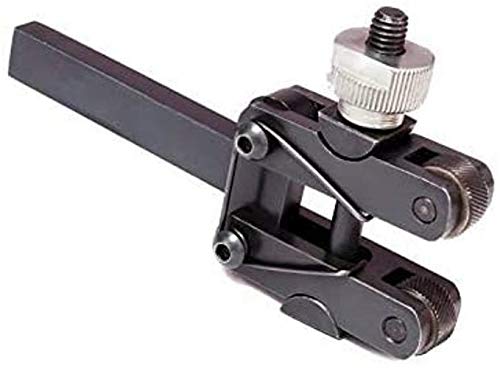
Clamp tools earn their keep on small lathes, and this spring-loaded version closes over workpieces from 3 mm to 25 mm in diameter, which covers everything from slim brass thumbscrews to chunky tool-handle ends. Because the wheels oppose each other, the squeezing force stays inside the tool instead of pushing the part sideways, so slender stock stays straight and mini lathe bearings stay happy. The spring action helps the wheels follow slight diameter changes along a handle, and the 16 mm shank fits the tool posts common on imported bench lathes. Set the closing pressure once, and repeat parts come out alike.
Specs:
– Style: Spring-loaded clamp
– Capacity: 3–25 mm workpiece diameter
– Shank: 16 mm
– Wheels: Opposed pair, diamond pattern
4. Buyohlic 6 Wheel Multi Texture Knurling Tool — The Mini Lathe Pattern Changer

Built around a rotating head with six wheels, this compact tool lets a mini lathe owner switch textures by indexing the head instead of unbolting anything. The 3/8 in shank matches the small tool posts on 7x lathes, and the wide 7/8 in wheels lay down a bold pattern band in a single pass, which suits the short knobs and dial rings those machines turn most often. At 5-1/2 in overall it stays clear of the chuck on short work. Like the larger turret tool above, it works as a bump tool, so take a firm, steady feed and let the wheels establish the pattern before traversing.
Specs:
– Style: Rotating head, bump type
– Shank: 3/8 in
– Wheels: 6 wheels, 7/8 in wheel width
– Overall length: 5-1/2 in
5. Buyohlic V-Clamp Type Knurling Tool 5–20 mm — The Small-Diameter Specialist

The V-clamp design wraps the workpiece in a V-shaped cradle with spring action, centering small stock automatically as the wheels close in. Its 5–20 mm capacity range is aimed squarely at the small end of the work: pen-sized hardware, model-engineering fittings, slim knobs, and the little adjustment screws that a bigger clamp tool cannot grip without bottoming out. Spring tension keeps contact even as the pattern forms and the effective diameter grows slightly, which is exactly when fixed tools tend to lose tracking. It mounts in a quick change tool post, so it swaps in and out of a mini lathe setup in seconds.
Specs:
– Style: V-clamp, spring action
– Capacity: 5–20 mm workpiece diameter
– Wheels: Opposed pair, diamond pattern
– Mounting: Quick change tool post
Comparison Table
| Tool | Style | Shank | Wheel / Capacity |
|---|---|---|---|
| Steelex M1094 6 Head | Rotating turret head, bump | 3/4 in × 5 in | 6 wheels in 3 pairs |
| Buyohlic Pivot Head | Pivot head, bump | 1/2 in square | Single wheel, 2.0 mm pitch |
| Spring Loaded Clamp Type | Spring-loaded clamp | 16 mm | 3–25 mm capacity |
| Buyohlic 6 Wheel Multi Texture | Rotating head, bump | 3/8 in | 6 wheels, 7/8 in width |
| Buyohlic V-Clamp Type | V-clamp, spring action | Tool post mount | 5–20 mm capacity |
Frequently Asked Questions
Should I choose a bump tool or a clamp tool for a mini lathe?
Choose a clamp or scissor style. Mini lathe spindles and bearings are lightly built, and a bump tool pushes all of its force sideways into them. A clamp tool closes over the blank from both sides, so the forces cancel and the machine only has to spin the work.
What is the difference between diamond and straight knurls?
Diamond knurls come from two diagonal wheels whose teeth cross, leaving a field of small pyramids that grip from any angle, which is why they suit twist knobs and tool handles. Straight knurls leave parallel ridges running around the blank and give a cleaner, more decorative band that still improves grip along the axis.
Why does my knurl pattern split or double-track?
The teeth are landing between the grooves they cut on the previous revolution instead of inside them. This usually means the blank diameter does not suit the wheel pitch. Turning the blank slightly larger or smaller, or choosing a wheel pitch that divides the circumference more evenly, brings the tracking back.
Which materials knurl well, and which should I avoid?
Brass, aluminum, and mild steel knurl cleanly because they flow under the wheels. Hardened steel and brittle stock resist the pattern and can chip the wheel teeth, so knurl before any hardening step, or skip knurling on parts that are already hard.
How do I set up for a clean first knurl?
Set the wheel center exactly on the lathe centerline, start with the tool square to the work, and bring the wheels into firm contact before starting the spindle. Use a slow speed, a steady feed, and plenty of cutting oil, and let the pattern form fully in one spot before traversing along the part.
Verdict
For a mid-size lathe that knurls often, the Steelex M1094 turret head is the most versatile single purchase, with three wheel pairs on one holder. Owners of small bench lathes who want one simple tool should start with the Buyohlic pivot head, while anyone worried about side load on a mini lathe should go straight to a clamp style: the spring-loaded 3–25 mm tool for general work, or the Buyohlic V-clamp for small diameters. The Buyohlic six-wheel rotating head fills the remaining gap, giving mini lathe users fast pattern changes in a compact 3/8 in shank tool. Match the style to your machine first, then the shank, then the pattern, and clean, even knurls follow.
Related guides
More from Amazon
Programs that pair well with the guide above. Offers and eligibility are set by Amazon and may change.
A free business account with business pricing and bulk-buying tools for work, shop or home office.
Create a business accountFree shipping on eligible items, Prime Video and more. Eligible new members can start with a free trial.
Start a Prime free trialAudiobooks and podcasts to listen to on the go. Eligible new members can start with a free trial.
Try Audible freeAd-free music streaming. Eligible new subscribers can start with a free trial.
Try Music Unlimited freeAs an Amazon Associate we earn from qualifying purchases.








