
Key takeaways
- Compare the best butt hinges with brass and steel leaves, smooth pins, and clean mortise fits for doors, cabinets, and wooden boxes each day.
What's inside
As an Amazon Associate I earn from qualifying purchases. This post may contain affiliate links at no extra cost to you.
A butt hinge is the oldest moving part in most woodshops: two flat leaves joined by a pin through a row of knuckles, with one leaf mortised into the door edge and the other into the frame. Closed, the leaves fold together and only the slim barrel shows. That simple form covers an enormous range, from a 3.5-inch steel hinge carrying a bedroom door down to a 2-inch stainless leaf on a jewelry box lid, and picking the wrong size or metal shows up fast as a sagging door, a lid that will not sit flat, or rust blooms on outdoor work.
Disclosure: As an Amazon Associate, I earn from qualifying purchases. Product details were verified at the time of writing.
This guide stays with true leaf butt hinges for doors, inset cabinet doors, and wooden boxes. It does not cover concealed European cup hinges, the hidden 35 mm cup system used on frameless kitchen cabinets, which is a different fitting with a different boring pattern. The five picks below run from full-size room doors down through cabinet doors to box lids, in steel and two grades of stainless, so you can match the hinge to the work instead of forcing one size onto everything.
Contents
How to Choose Butt Hinges
Start with size against door thickness and weight. The hinge height should suit the door: 3.5-inch hinges are the residential standard for interior room doors, 2.5 to 3-inch hinges suit cabinet doors and cupboard doors, and 1 to 2-inch hinges belong on boxes, case lids, and small flaps. A hinge that is too small lets a door sag at the latch side; one that is too large looks clumsy and needs a deeper mortise than thin stock can spare.
Match the mortise to the leaf. A butt hinge leaf sits in a shallow mortise cut to exactly the leaf thickness, so the closed hinge leaves the door flush with the frame. Too shallow and the door binds on the frame side; too deep and a gap opens at the knuckle. On thin box stock, where a full mortise would cut through most of the wall, small hinges are often surface mounted on the inside face instead, which is normal practice for lids.
Pick the metal for the room the work lives in. Plain steel with a plated finish is fine for dry interiors and is the usual choice for painted or nickel-matched room doors. Solid brass is the traditional pick for fine furniture and boxes, warm in tone and free of rust, though softer than steel. Stainless steel shrugs off damp air: 304 grade handles kitchens, bathrooms, and workshops well, while 316 grade adds molybdenum for salt air and marine use, which is why hatch and locker hinges are usually 316.
Check the pin. A loose pin can be tapped up and out so the door lifts off its hinges for finishing or moving furniture, which is handy on room doors. A fixed pin cannot work its way up as the door swings, and suits boxes, hatches, and any lid that should stay put. Ball-bearing knuckles belong on heavy, high-traffic doors; plain knuckles are fine everywhere else in the home shop.
Match the corner shape to the mortise. Leaves come with square corners or rounded corners. A rounded-corner hinge drops into a router-cut mortise with matching round corners, while a square-corner hinge needs the mortise corners squared with a chisel. Replacing hinges is easiest when the new leaf matches the old corner shape and screw pattern exactly.
Count hinges per door, and read load figures as pounds per pair. Two hinges carry most cabinet doors and box lids. Room doors usually take three, and tall or heavy hardwood doors do better with three even when two would hold, because the middle hinge resists bowing. Where a maker publishes a load figure, it is stated in plain pounds per pair or per hinge; divide the door weight across the hinges fitted and keep a margin rather than running at the limit.
The 5 Best Butt Hinges
1. Amazon Basics Rounded Interior Door Hinges, 3.5 x 3.5 Inch, Satin Nickel (18-Pack)

For standard interior room doors, this is the workhorse pick. The 3.5 by 3.5 inch steel leaves match the mortises already cut into most modern hollow-core and solid-core interior doors, so a hinge swap during a repaint or a finish change is a screw-for-screw job in most cases. The rounded corners suit router-cut mortises, the satin nickel finish matches the lever handles and latch sets found in most homes, and the pack of eighteen covers six doors at three hinges each, which is a sensible quantity for a floor of bedrooms and bathrooms. Screws are included in the box.
Specs
- Size: 3.5 x 3.5 inches
- Material: Steel
- Finish: Satin nickel
- Corners: Rounded
- Mounting: Full mortise, door mount
- Pack size: 18 hinges with screws
- Model: AB-DH548-SN
- Best for: Interior room doors
2. CAMMUITA 3-Inch Stainless Steel Butt Hinges (6-Pack)

The 3-inch size is the hinge that cabinet and utility work keeps asking for: big enough for a solid cupboard or workshop cabinet door, small enough for window frames and wooden boxes that a room-door hinge would overwhelm. These CAMMUITA leaves are stainless steel with a brushed silver finish, so they hold up in kitchens, bathrooms, and damp workshops where plated steel eventually freckles. At 3 by 2 inches open, each leaf gives enough screw spread to bite well into frame stock, and the six-pack with screws covers three cabinet doors or a run of matching boxes.
Specs
- Size: 3 x 2 inches open
- Material: Stainless steel
- Finish: Brushed silver
- Mounting: Door mount, mortise or surface
- Pack size: 6 hinges with screws
- Model: CAM-H7650-001
- Best for: Cabinets, windows, wooden boxes, light doors
3. Amazon Basics AB-4025 Butt Hinge, 2-2/5 Inch, Satin Nickel (12-Pack)
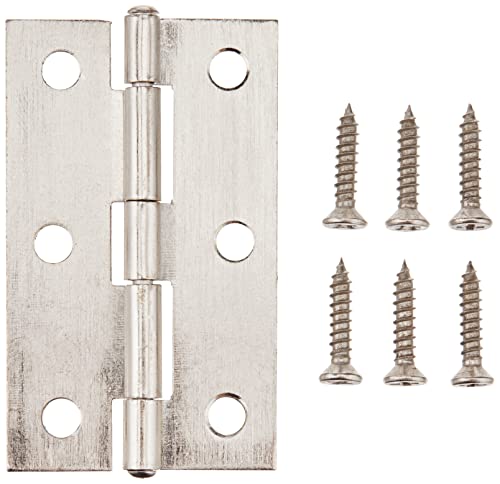
Between cabinet hinges and box hinges sits this 2.4-inch size, and it earns its place on inset cabinet doors, small cupboards, and furniture doors where a 3-inch leaf would crowd the stile. The AB-4025 is a plain, square-working butt hinge in a satin nickel finish that blends with kitchen and bathroom hardware, sold as a twelve-pack so a full run of matching cabinet doors can be hung from one box with hinges left over for the next project. It is a straightforward leaf-and-pin design with no springs or dampers, which is exactly what a hand-built inset door wants, since the catch or latch handles the closing.
Specs
- Size: 2-2/5 inches (2.4 inches)
- Finish: Satin nickel
- Mounting: Mortise or surface on small doors
- Pack size: 12 hinges
- Model: AB-4025
- Best for: Cabinet doors, small cupboards, furniture doors
4. Adiyer 304 Stainless Steel Folding Butt Hinges, 2-Inch (10-Pack)

Box makers will use more of these than any other hinge on the list. Each Adiyer hinge measures 50 by 37 mm open with a slim 1.2 mm leaf, so the mortise it needs is shallow enough for typical box walls, and surface mounting inside a lid works just as well. The 304 stainless build means a kitchen keepsake box, a humid bathroom cabinet, or a toolbox lid will not grow rust stains around the screws. Ten hinges with screws per pack covers five lids, and the brushed silver tone sits quietly against pale woods where a yellow brass hinge would shout.
Specs
- Size: 50 x 37 mm (2 x 1.5 inches open)
- Leaf thickness: 1.2 mm
- Material: 304 stainless steel
- Finish: Brushed, silver tone
- Mounting: Mortise or surface, door mount
- Pack size: 10 hinges with screws
- Best for: Jewelry boxes, case lids, small cabinet doors
5. 316 Stainless Steel Marine Grade Butt Hinges, 2 x 2 Inch (2-Pack)

When a hinge has to live outdoors or on the water, leaf thickness and alloy matter more than size. These 2 by 2 inch hinges are cast thick at 5 mm per leaf in 316 marine grade stainless, the alloy chosen for salt air, and each hinge weighs 95 g, which tells you how much metal is in the knuckle. The maker supplies 4.8 by 19 mm screws in the pack. Fit them on boat hatches, deck lockers, garden storage boxes, and outdoor cabinet doors where 304 stainless or plated steel would eventually pit, and where a lid may be stood on or loaded while open.
Specs
- Size: 2 x 2 inches (50 x 50 mm)
- Leaf thickness: 5 mm (0.2 inch)
- Material: 316 stainless steel
- Weight: 95 g per hinge
- Screws: 4.8 x 19 mm, included
- Mounting: Surface mount
- Pack size: 2 hinges
- Best for: Boat hatches, outdoor cabinets, damp workshops
Comparison Table
| Product | Size | Material | Finish | Pack Size | Best For |
|---|---|---|---|---|---|
| Amazon Basics Rounded Door Hinges | 3.5 x 3.5 in | Steel | Satin nickel | 18 | Interior room doors |
| CAMMUITA Butt Hinges | 3 x 2 in | Stainless steel | Brushed silver | 6 | Cabinets, windows, boxes |
| Amazon Basics AB-4025 | 2.4 in | Not published | Satin nickel | 12 | Cabinet and cupboard doors |
| Adiyer Folding Butt Hinges | 2 x 1.5 in | 304 stainless steel | Brushed silver | 10 | Jewelry boxes, case lids |
| 316 Marine Grade Butt Hinges | 2 x 2 in | 316 stainless steel | Natural stainless | 2 | Hatches, outdoor cabinets |
Frequently Asked Questions
How deep should a butt hinge mortise be?
Exactly one leaf thickness. Set the leaf into the door edge, mark around it with a knife, and chop or rout down until the leaf face sits flush with the wood surface. When both leaves are flush, the closed door meets the frame with only the knuckle showing and a thin, even gap on the latch side.
How many hinges does a door need?
Two hinges handle cabinet doors, cupboard doors, and box lids. Interior room doors normally take three. Add the third hinge on any door that is tall, heavy, or made from a hardwood prone to bowing, even if two hinges would carry the weight on paper.
Can I surface mount a butt hinge instead of cutting a mortise?
Yes, on boxes and light lids it is common practice, usually on the inside face so the leaves hide when the lid closes. On room and cabinet doors a mortise is worth cutting, because it carries the load on the wood shoulder rather than on the screws alone and keeps the door aligned with the frame.
What is the difference between 304 and 316 stainless hinges?
Both resist rust far better than plated steel. Grade 316 adds molybdenum, which resists the pitting that salt water and sea air cause, so 316 is the pick for boats, coastal homes, and outdoor work. Indoors, 304 gives the same clean service for less demanding conditions.
Are butt hinges right for frameless kitchen cabinets?
Usually not. Frameless cabinets are built around concealed cup hinges bored into the door back, a separate system covered in our cabinet hinge guide. Butt hinges are the right call for face-frame cabinets with inset doors, room doors, furniture, and boxes, where the leaf mortises into the edge in the traditional way.
Verdict
Match the hinge to the scale of the work and the air it will live in. Room doors point straight to the Amazon Basics 3.5-inch satin nickel pack, which drops into standard mortises and covers six doors from one box. Cabinet and utility doors are best served by the CAMMUITA 3-inch stainless hinges for damp rooms, or the Amazon Basics AB-4025 at 2.4 inches for smaller inset doors in dry interiors. Box makers should keep the Adiyer 2-inch 304 stainless hinges on hand for lids and cases, and anyone fitting hatches or outdoor storage should step up to the thick-leaf 316 marine hinges. Get the size and the alloy right, cut the mortise to one leaf thickness, and a butt hinge will swing quietly for decades.
Related guides
More from Amazon
Programs that pair well with the guide above. Offers and eligibility are set by Amazon and may change.
A free business account with business pricing and bulk-buying tools for work, shop or home office.
Create a business accountFree shipping on eligible items, Prime Video and more. Eligible new members can start with a free trial.
Start a Prime free trialAudiobooks and podcasts to listen to on the go. Eligible new members can start with a free trial.
Try Audible freeAd-free music streaming. Eligible new subscribers can start with a free trial.
Try Music Unlimited freeAs an Amazon Associate we earn from qualifying purchases.








