
Our Top Picks
 Varathane Triple Thick Polyurethane Satin Wood Finish1 Quart (Pack of 1)4.25 x 4.25 x 5 inches0.9 poundsCheck on Amazon


What's inside
- How to Choose the Best Polyurethane for Wood
- 1. Varathane Oil-Based Ultimate Polyurethane, 1 Quart, Semi-Gloss
- 2. General Finishes High Performance Water-Based Topcoat, 1 Quart, Satin
- 3. Minwax Polycrylic Protective Finish, 1 Quart, Clear Satin
- 4. Varathane Triple Thick Polyurethane, 1 Quart, Satin
- 5. General Finishes Arm-R-Seal Oil-Based Topcoat, 1 Quart, Semi-Gloss
- Comparison Table
- FAQ
- Verdict
As an Amazon Associate I earn from qualifying purchases. This post may contain affiliate links at no extra cost to you.
Polyurethane is the film finish most home shops reach for when a surface has to survive daily contact: mug rings on a dining table, chair legs scuffing a floor, cabinet doors handled a dozen times a day. It earns that place because the cured film is hard, water resistant, and repairable in a way penetrating oils are not — but “polyurethane” on a label covers several different chemistries, and picking the wrong one shows up as an amber cast on pale maple, brush marks that never leveled, or a soft film that dents because it was put into service before it cured. The five picks below cover the four forms that matter for interior wood: a traditional oil-based brush-on poly, a premium water-based polyurethane blend, a crystal-clear water-based acrylic for light wood and painted pieces, a one-coat high-build water-based poly, and an oil-based wipe-on urethane for a hand-rubbed furniture finish.
Disclosure: As an Amazon Associate, I earn from qualifying purchases. Product details were verified at the time of writing.
This guide covers polyurethane film topcoats for interior wood only. It does not cover sanding sealers or other first coats that go under a topcoat, stains and dyes that add color before the clear coat, spar urethanes made to flex on exterior and marine wood, or two-part and moisture-cured floor systems mixed on site. One pick is an acrylic protective finish rather than a true polyurethane; it is included because it does the same job on the projects where polyurethane’s amber tone is the problem, and that distinction is stated where it appears.
Contents
- How to Choose the Best Polyurethane for Wood
- 1. Varathane Oil-Based Ultimate Polyurethane, 1 Quart, Semi-Gloss
- 2. General Finishes High Performance Water-Based Topcoat, 1 Quart, Satin
- 3. Minwax Polycrylic Protective Finish, 1 Quart, Clear Satin
- 4. Varathane Triple Thick Polyurethane, 1 Quart, Satin
- 5. General Finishes Arm-R-Seal Oil-Based Topcoat, 1 Quart, Semi-Gloss
- Comparison Table
- FAQ
- Verdict
How to Choose the Best Polyurethane for Wood
Start with the base: oil or water. Oil-based polyurethane is an alkyd-urethane film that adds a warm amber tone, deepens with age, and gives you a long open time to brush out a coat before it sets. Water-based polyurethane dries much faster, smells far less, cleans up at the sink, and stays close to the wood’s fresh-sanded color. Neither is universally tougher: a good water-based product applied in the maker’s full coat count protects as well as oil in most furniture service, while oil still holds an edge in slow, forgiving application on large flat surfaces. Choose by the color you want and the schedule you can keep, then buy the best can inside that family.
Match the sheen to the wear, not just the look. Gloss shows every dust nib, scratch, and brush mark; satin and semi-gloss hide the evidence of daily use, which is why four of the five picks here sit in that middle band. Sheen is set by flattening agents in the can, and the final coat decides what you see — build coats in a higher sheen if you like, then finish with the sheen you want on top. Stir any satin or matte can thoroughly and often, because the flattening paste settles to the bottom and an unstirred can dries glossier than its label.
Count coats in film, not in passes. A protective film needs thickness, and thin coats build it more safely than one heavy coat, which can sag on verticals, wrinkle as it skins over, or stay soft underneath. Three standard coats is the normal schedule for tabletops and cabinets. The exception is a high-build product formulated to lay down several coats’ worth of film in one pass; treat that as its own system and follow its label rather than mixing schedules. Floors and high-traffic tabletops deserve the full coat count and then some patience.
Dry time is not cure time. Every can lists two clocks: when you may recoat, and when the film is hard enough for service. Water-based picks can often be recoated in one to two hours, oil-based picks need the better part of a day between coats, and full cure — the point where the film reaches its working hardness — runs from several days to three weeks depending on the product. A tabletop put back into daily use at the dry-to-touch stage will pick up marks that a cured film would shrug off. Plan the project calendar around the cure, not the recoat.
Respect the application method each can was built for. Brush-on polys want a natural-bristle brush for oil formulas and a synthetic brush or foam applicator for water-based ones, laid on in long strokes with a wet edge and no going back over tacky areas. Wipe-on urethane is a different technique entirely: thin coats flooded on with a lint-free cloth and wiped level, building film slowly with almost no chance of brush marks. Spraying thins and speeds the work but demands ventilation and masking the whole room. Pick the method that fits your space and patience, then buy the form made for it.
Mind the safety basics. Oil-based cans are flammable, strong-smelling liquids that want real ventilation and no ignition sources nearby. Solvent-soaked rags can heat up and ignite if left crumpled, so lay them flat outdoors to dry or store them submerged in water in a sealed metal container until disposal. Water-based picks remove most of those concerns but still need dust control: sand between coats with fine paper, vacuum, and wipe down before the next coat, because nibs left under a clear film are there for the life of the finish.
1. Varathane Oil-Based Ultimate Polyurethane, 1 Quart, Semi-Gloss
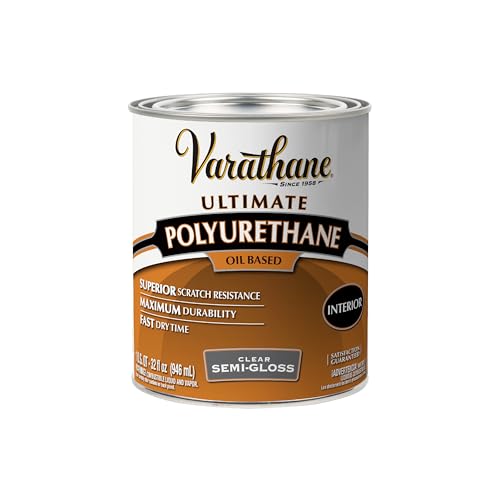
This is the conventional brush-on poly in its most useful form: an oil-modified polyurethane in a quart of semi-gloss, the size that covers a dining table or a run of cabinet doors in a full three-coat schedule. Varathane builds the Ultimate line for clarity within the oil family — the film goes on with less of the muddy cast older oil polys were known for, though it still warms the wood and will deepen in tone over the years, which is exactly what most oak, cherry, and walnut work wants. The listing puts coverage at about 150 square feet per quart, and the maker’s data for this family gives a two-hour dry to the touch with handling in four to six hours; leave the better part of a day before recoating and several days before a tabletop takes daily service. It is an interior product for furniture, cabinets, doors, and trim, self-leveling enough to forgive a careful beginner’s brush work, and it cleans up with mineral spirits. Choose it when the project is medium to dark wood, the room can be ventilated, and you want the familiar oil-poly look with a modern, clearer film.
Specs
- Type: Oil-based brush-on polyurethane
- Base: Oil-modified polyurethane (alkyd urethane)
- Size: 1 quart (32 fl oz), model 6041H
- Sheen: Semi-gloss
- Coverage: About 150 sq ft per quart per listing
- Dry: Touch in about 2 hours, handle in 4–6 hours per maker data
- Use: Interior wood — furniture, cabinets, doors, trim
- Cleanup: Mineral spirits
2. General Finishes High Performance Water-Based Topcoat, 1 Quart, Satin
High Performance is the water-based pick for work that has to take real abuse: General Finishes formulates it as a polyurethane and polyacrylic blend with a UV stabilizer in the film, and positions it as the hardest consumer topcoat in its line. In practice that means a dining table or kitchen cabinet run can be finished in a day — the listing gives a dry time between coats of only one to two hours — and the film cures out to a hard, water-resistant surface that stands up to the cleaners and spills of daily service. The satin sheen keeps the color of the wood close to its sanded state with none of the amber an oil film adds, and a quart covers roughly 125 to 150 square feet across a full schedule. Two boundaries come straight from the maker: it is an interior-only finish, and clear topcoats in this family should not go over bright white paint, where a reaction with the substrate can yellow the film. Inside those lines — furniture, cabinets, and tabletops in natural wood tones — it is the strongest water-based option here.
Specs
- Type: Water-based polyurethane topcoat
- Base: Polyurethane/polyacrylic blend with UV stabilizer
- Size: 1 quart (32 fl oz), model QTHS
- Sheen: Satin
- Coverage: About 125–150 sq ft per quart per maker data
- Recoat: 1–2 hours between coats per listing
- Use: Interior only — furniture, cabinets, tabletops
- Cleanup: Soap and water
3. Minwax Polycrylic Protective Finish, 1 Quart, Clear Satin
Polycrylic is the honest exception in this guide: it is a water-based acrylic protective finish, not a true polyurethane, and it earns its place on the one job where polyurethane is the wrong tool — pale wood and painted surfaces. Where even a water-based poly can add a hint of warmth, Polycrylic dries crystal clear and stays that way, so white-painted cabinets, pickled pine, and light maple keep their color under a protective film. The quart of clear satin is the workhorse size, with the maker’s figures putting coverage near 125 square feet per quart, a recoat after two hours, and light use after a day. It brushes on with a synthetic brush or foam applicator, sands lightly between coats, and cleans up with warm water. The trade is film hardness: an acrylic film gives back a little of the chemical and abrasion resistance the true polys above it offer, so keep it on cabinets, shelves, trim, and painted furniture rather than a kitchen table that hosts hot dishes daily. For the light-and-bright work it was made for, nothing else in this list substitutes.
Specs
- Type: Water-based acrylic protective finish
- Base: Acrylic (not a polyurethane resin)
- Size: 1 quart (32 fl oz), model 63333
- Sheen: Clear satin
- Coverage: About 125 sq ft per quart per maker data
- Recoat: After 2 hours; light use after 24 hours
- Use: Interior wood and painted surfaces — cabinets, furniture, trim
- Cleanup: Warm water
4. Varathane Triple Thick Polyurethane, 1 Quart, Satin
Triple Thick exists for the finisher who wants a full protective film without a three-day coat schedule. The water-based formula is made to go on at roughly three times the thickness of a conventional polyurethane, so a single coat lays down the film build that would otherwise take three passes — the maker’s claim, and the reason the can exists. It is self-leveling, so that heavy coat settles out smooth instead of holding brush texture, and it dries with the low odor and sink cleanup of the water-based family. The satin sheen and clear film suit cabinets, doors, and furniture where the wood’s color should stay put. The honest limits follow from the concept: one heavy coat still needs its full drying time before service, thick film on vertical surfaces must be watched for sagging in the first minutes, and a damaged spot is harder to feather in invisibly than one thin coat among three. For a weekend cabinet or door project that needs real protection on a short calendar, it is the fastest route in this guide.
Specs
- Type: Water-based high-build polyurethane
- Base: Water-based polyurethane, self-leveling
- Size: 1 quart (32 fl oz)
- Sheen: Satin
- Build: One coat equals three coats of conventional polyurethane per maker
- Application: Brush, interior wood surfaces
- Use: Cabinets, doors, furniture, trim
- Cleanup: Soap and water
5. General Finishes Arm-R-Seal Oil-Based Topcoat, 1 Quart, Semi-Gloss

Arm-R-Seal is the wipe-on entry, and it changes the whole application conversation. It is an oil and urethane resin topcoat thin enough to flood on with a lint-free cloth and wipe level, which removes brush marks, lap lines, and most dust-nib drama from the process — each coat goes on thin and even, and the hand-rubbed look it builds over three coats is the finish a lot of furniture makers are actually picturing when they say they want a clear coat. General Finishes puts coverage at 100 to 125 square feet per quart and asks for patience in exchange for the easy application: the maker’s data sheet gives six to twelve hours to dry and twelve to twenty-four hours before the next coat. It ambers like any oil finish, deepening walnut and cherry and warming oak, and it is an interior product for furniture, cabinets, and case goods. Choose it for the piece you will touch every day — a tabletop, a desk, a chair — where a flawless, close-to-the-wood film matters more than finishing speed.
Specs
- Type: Oil-based wipe-on urethane topcoat
- Base: Oil and urethane resins, penetrating film finish
- Size: 1 quart (32 fl oz), model SGQT
- Sheen: Semi-gloss
- Coverage: 100–125 sq ft per quart per maker data
- Schedule: 3 coats; dry 6–12 hours, recoat in 12–24 hours
- Use: Interior only — furniture, cabinets, case goods
- Cleanup: Mineral spirits
Comparison Table
| Product | Base | Sheen | Size | Recoat window | Best for |
|---|---|---|---|---|---|
| Varathane Ultimate Polyurethane | Oil-based | Semi-gloss | 1 quart | About a day | Classic warm film on tables and cabinets |
| General Finishes High Performance | Water-based blend | Satin | 1 quart | 1–2 hours | Hard-wearing furniture and cabinet film |
| Minwax Polycrylic | Water-based acrylic | Clear satin | 1 quart | 2 hours | Pale wood and painted surfaces |
| Varathane Triple Thick | Water-based | Satin | 1 quart | One-coat system | Full film build on a short schedule |
| General Finishes Arm-R-Seal | Oil-based wipe-on | Semi-gloss | 1 quart | 12–24 hours | Hand-rubbed furniture finish |
FAQ
How many coats of polyurethane does a tabletop need?
Three standard coats is the working rule for a tabletop or cabinet doors, sanded lightly between coats once each coat has dried. One-coat high-build products are the exception and should be used as their own system. Floors in traffic paths deserve the full schedule and the full cure before furniture goes back.
Will polyurethane yellow my wood?
Oil-based polyurethane starts with an amber tone and deepens with age, which flatters medium and dark woods and visibly warms pale ones. Water-based polyurethane dries close to the wood’s natural color, and a clear acrylic finish such as the Polycrylic pick stays the clearest of all — the right family for white paint, pickled finishes, and light maple.
Can I put water-based polyurethane over an oil-based stain?
Yes, once the stain has dried completely — give an oil-based stain at least the full drying time on its label, and longer in a cool shop, because a water-based film over still-gassing stain can cloud or lose adhesion. The same patience applies in reverse. When in doubt, test the full schedule on an offcut or an underside first.
What is the difference between dry time and cure time?
Dry time is when the surface can be touched or recoated; cure time is when the film reaches its working hardness, which runs from several days to about three weeks depending on the product. A surface used hard during the cure window can pick up rings and dents that the same film would resist a week later.
How do I get rid of dust nibs and brush marks in the final coat?
Prevention beats repair: sand lightly with fine paper between coats, vacuum and wipe the surface clean, and work in still air. For a finished surface that dried with minor nibs, let it cure fully, then level it gently with very fine paper or a fine abrasive pad and buff back to an even sheen rather than adding another coat over the problem.
Verdict
For most shops, the choice splits cleanly in two. If the wood is medium or dark and the room can be ventilated, the Varathane Ultimate oil-based quart gives the classic warm, durable film in the most forgiving brush-on form. If the schedule is tight or the wood is pale, General Finishes High Performance builds the hardest water-based film here and recoats fast enough to finish in a day. Reach for Minwax Polycrylic when the surface is painted or pickled and clarity matters more than maximum film hardness, for Varathane Triple Thick when a cabinet or door needs a full build on a weekend, and for Arm-R-Seal when the piece deserves a hand-rubbed finish and you can give each coat its day. Match the base to the color you want, count the coats the maker asks for, and respect the cure — those three decisions matter more than the name on the can.
Related guides
More from Amazon
Programs that pair well with the guide above. Offers and eligibility are set by Amazon and may change.
A free business account with business pricing and bulk-buying tools for work, shop or home office.
Create a business accountFree shipping on eligible items, Prime Video and more. Eligible new members can start with a free trial.
Start a Prime free trialAudiobooks and podcasts to listen to on the go. Eligible new members can start with a free trial.
Try Audible freeAd-free music streaming. Eligible new subscribers can start with a free trial.
Try Music Unlimited freeAs an Amazon Associate we earn from qualifying purchases.








