
Key takeaways
- Compare the best fore planes for flattening rough boards with cambered irons, tote designs, and sole lengths for faster, truer stock prep work.
What's inside
- How to Choose the Best Fore Plane
- 1. WoodRiver #6 Bench Plane V3 — The Premium Fore Plane
- 2. Taytools 469591 Fore Bench Hand Plane #6 — Bedrock Pattern in Ductile Iron
- 3. Groz No. 6 Fore Plane 39703 — The Value Pick With a Published Sole Figure
- 4. Big Horn 19329 No. 6 Fore Plane — Budget Casting, Full-Thickness Iron
- 5. Faithfull No. 6 Fore Plane PLANE6 — The Traditional Bailey Pattern
- Comparison Table
- FAQ
- Verdict
As an Amazon Associate I earn from qualifying purchases. This post may contain affiliate links at no extra cost to you.
Every flat board starts as a rough one, and the fore plane is the tool that does the heavy middle work of that transformation. It comes after the scrub plane and the jack, which hog off the worst of the twist and cup, and before the try plane and smoother, which refine what is left. In the Stanley numbering system the fore plane is the No. 6: about 18 inches of sole, long enough to bridge the low spots on a board face and shave only the high ones, yet short and light enough to push across a wide panel for an hour without wrecking your shoulders. Fitted with a noticeably cambered iron and a wide-open mouth, it takes thick, scalloped shavings that level a face fast and leave a surface the longer planes can true up in a few passes.
Disclosure: As an Amazon Associate, I earn from qualifying purchases. Product details were verified at the time of writing.
This guide compares five true No. 6 fore planes you can actually order today: a premium Bedrock-pattern plane from Woodcraft’s WoodRiver line, a ductile-iron Bedrock-style plane from Taytools, a value pick from Groz that publishes a sole flatness figure, a budget cast-iron model from Big Horn with a full 1/8 inch iron, and the traditional Bailey-pattern No. 6 from Faithfull. Each one is a genuine 18 inch fore plane with a 2-3/8 inch iron — no jack planes and no jointers dressed up as substitutes. They differ in frog design, iron hardness, sole finishing and how much tuning they ask of you, and those differences decide which one belongs on your bench.
Contents
- How to Choose the Best Fore Plane
- 1. WoodRiver #6 Bench Plane V3 — The Premium Fore Plane
- 2. Taytools 469591 Fore Bench Hand Plane #6 — Bedrock Pattern in Ductile Iron
- 3. Groz No. 6 Fore Plane 39703 — The Value Pick With a Published Sole Figure
- 4. Big Horn 19329 No. 6 Fore Plane — Budget Casting, Full-Thickness Iron
- 5. Faithfull No. 6 Fore Plane PLANE6 — The Traditional Bailey Pattern
- Comparison Table
- FAQ
- Verdict
How to Choose the Best Fore Plane
Start with sole length and weight. The fore plane’s whole argument is its 18 inch sole. A jack plane at 14 inches follows the dips in a rough face; a jointer at 22 inches bridges them beautifully but is a heavy, deliberate tool to push across a panel all afternoon. The No. 6 splits the difference: it rides over hollows up to roughly its own length, knocks down the ridges between them, and at around seven to eight pounds it carries enough momentum to keep a thick cut moving without the fatigue of a full jointer. If your boards are mostly under four feet, that trade is exactly right.
Insist on a cambered iron and an open mouth. Fore work is not smoothing. The iron should carry a visible curve across its edge — a radius in the region of 6 to 8 inches — so the middle of the cut digs deep while the corners leave no tracks. That curved edge, set to take a shaving several thousandths thick, needs a mouth opened well up so the shaving has somewhere to go. Any No. 6 with an adjustable frog lets you open that gap; a fixed, tight mouth turns a fore plane into a long smoother and defeats the purpose.
Check iron width and thickness. Every plane here takes the standard 2-3/8 inch cutter, which is the width you want: it flattens a panel in fewer overlapping passes than a 2 inch iron and matches the replacement blades sold everywhere. Thickness is where the field splits. A thicker iron, around 1/8 inch, sits on the frog without flexing and resists chatter when the cambered edge bites deep into reversing grain. Thinner stock irons work, but they are the first upgrade most owners make, so a plane that ships with a stout iron saves you a second purchase.
Know the two frog patterns. Bailey-pattern frogs seat the iron on a cast rib and are adjusted by moving the whole frog with screws under the iron — simple, proven, and fitted to the Groz, Big Horn and Faithfull here. Bedrock-pattern frogs, used by the WoodRiver and the Taytools, bed the iron on a fully machined face in complete contact with the body, and the mouth can be adjusted from behind without lifting the iron out. On a fore plane you set the mouth wide and leave it, so the Bedrock advantage is real but modest; where it shows is in how solidly the iron stays put under a heavy cut.
Ask what the maker says about the sole. A fore plane sole does not need smoother-grade flatness — it is a leveling tool, not a finishing one — but it must be straight along its length, or it planes the wave it rides into the board. Makers answer this differently: lapped soles, precision-ground soles, or, in one case below, a published flatness tolerance figure. A sole that is hollow across its width or twisted end to end is a return, not a tuning project, whatever the maker claims.
Mind the tote and knob. You push a fore plane with your whole upper body, often across the grain at a diagonal, so the rear tote takes real load. A tall, closed hardwood tote that fills the hand beats a small open handle, and a front knob you can palm down on the toe matters when the cut starts. Sapele, rosewood and plain hardwood all serve; what you are checking is size and shape, not species.
Budget some tuning time. Almost every plane in this class arrives with an iron that needs honing and a sole that benefits from a check against a straightedge. The premium picks need the least work; the budget picks may need the frog seats cleaned and the iron’s back flattened. None of that is a defect — it is the normal shape of this market — but go in expecting an hour at the bench before the first board, not five minutes.
1. WoodRiver #6 Bench Plane V3 — The Premium Fore Plane

WoodRiver’s V3 line is modeled directly on the Stanley Bedrock, the best bench planes Stanley ever made, and the No. 6 carries that pattern faithfully: heavy, stress-relieved ductile iron castings, a fully machined frog that beds the iron over its whole face, and soles and sides machined flat and square. At 7-3/4 pounds it has the mass a fore plane wants, and the 17-3/4 inch sole is the full No. 6 length. The V3 revisions reshaped the rear tote for a fuller grip and enlarged the depth adjustment wheel, both of which you feel during a long flattening session. The 2-3/8 inch high carbon steel iron takes a camber well and the frog adjusts from behind, so opening the mouth for rough work does not disturb your depth setting. Of the five planes here, this is the one that asks the least tuning before it cuts the way it should, and the one whose machining you can feel in every pass.
Specs
- Sole length: 17-3/4 inches; body 2-7/8 inches wide
- Iron: 2-3/8 inch high carbon steel
- Body: stress-relieved ductile iron castings
- Frog: fully machined, Bedrock pattern, adjustable with the iron in place
- Weight: 7-3/4 lb
- Handles: lightly finished hardwood tote and knob
2. Taytools 469591 Fore Bench Hand Plane #6 — Bedrock Pattern in Ductile Iron
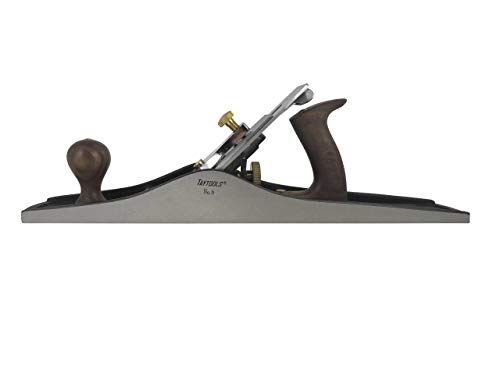
Taytools built its bench plane line on the same Bedrock idea and sells it without the big retail markup. Body and frog are both ductile cast iron — the near-unbreakable casting material — with the sole and sides lapped flat, and the iron is hardened to 55–60 on the Rockwell C scale, a published figure most makers in this class will not give you. The 18 inch sole and 2-3/8 inch blade are true No. 6 dimensions, the bed angle is the standard 45 degrees, and the sapele tote and knob are shaped generously enough for two-handed pushing across wide panels. Set the frog back, grind a healthy camber into the iron, and it takes the thick, scalloped shaving fore work calls for. Expect to spend a little time on initial setup — flattening the iron’s back and checking the frog seating — in exchange for Bedrock-pattern solidity at a plainer figure.
Specs
- Sole length: 18 inches
- Iron: 2-3/8 inch, hardened to Rockwell C 55–60
- Body: ductile cast iron body and frog
- Sole and sides: lapped flat
- Bed angle: 45 degrees
- Handles: sapele tote and knob
3. Groz No. 6 Fore Plane 39703 — The Value Pick With a Published Sole Figure

Groz, an Indian maker with a long catalog of bench planes, sells its No. 6 on a claim almost nobody else in this class will print: a sole flatness tolerance of 0.003 inch. That number is the whole reason the plane earns its place here — on a leveling tool, a straight sole is the spec that decides whether the board comes out flat. The rest of the package is honest Bailey-pattern hardware: an 18 inch grey cast iron body, a 60mm hardened steel cutter, an adjustable frog so you can open the mouth for cambered rough work, and traditional hardwood handles. It weighs about 7-3/4 pounds, right in the fore plane band. The trade for the low figure is finishing: edges are less refined than the WoodRiver’s, and the iron benefits from a careful honing before first use. If you want a true No. 6 and would rather spend your money on lumber, this is the sensible buy.
Specs
- Sole length: 18 inches
- Cutter: 60mm (2-3/8 inch) hardened steel
- Body: cast iron
- Frog: adjustable, Bailey pattern
- Sole flatness: maker publishes a 0.003 inch tolerance figure
- Weight: about 7-3/4 lb
- Handles: hardwood tote and knob
4. Big Horn 19329 No. 6 Fore Plane — Budget Casting, Full-Thickness Iron

Big Horn’s No. 6 is the straightforward budget route into fore planing: an 18 inch cast iron body, an adjustable frog on a stated 45 degree bed, and rosewood handles. Its standout spec is the iron — a full 1/8 inch thick, where many budget planes ship a noticeably thinner cutter that flexes under a deep cambered cut. That stout iron, properly cambered, is what lets this plane do real fore work instead of merely looking the part. The sole is precision-ground per the maker, though no tolerance figure is published, and the maker’s own materials describe the iron’s steel in two different ways in different places, so treat the iron as a good thick blank of unnamed steel and judge it by how it hones and holds an edge in your shop. Plan on the longest tuning session of the five here: clean the frog seats, flatten the iron’s back, and check the sole with a straightedge before the first board.
Specs
- Sole length: 18 inches
- Iron: 2-3/8 inch wide, 1/8 inch thick
- Bed angle: 45 degrees, stated by the maker
- Body: cast iron, precision-ground sole
- Frog: adjustable, Bailey pattern
- Handles: rosewood tote and knob
5. Faithfull No. 6 Fore Plane PLANE6 — The Traditional Bailey Pattern

Faithfull’s No. 6 is the classic British workshop version of the Bailey fore plane, built the way these tools have been built for decades: a grey cast iron body with the base and sides precision ground for flatness and squareness, machined seatings that keep the blade assembly from shifting under load, and a lever cap secured by a brass locking screw. The cutter is 60mm wide over a 460mm body — the metric statement of the same 2-3/8 inch by 18 inch No. 6 pattern — and depth is set with a solid brass adjustment nut. The wooden handles are shaped in the traditional pattern, comfortable and familiar to anyone raised on Bailey planes. Faithfull states plainly that the blade needs honing before use, which is the honest position for the whole class. For a woodworker who wants the traditional tool from a maker that still catalogs the full Bailey range, this is the one.
Specs
- Overall length: 460mm (18 inches)
- Cutter: 60mm (2-3/8 inch)
- Body: grey cast iron, precision-ground base and sides
- Lever cap: brass locking screw
- Adjustment: solid brass depth nut, Bailey pattern
- Handles: wood tote and knob
- Setup note: maker states the blade requires honing before use
Comparison Table
| Plane | Sole length | Iron | Body | Frog | Weight |
|---|---|---|---|---|---|
| WoodRiver #6 Bench Plane V3 | 17-3/4 in | 2-3/8 in high carbon steel | Ductile iron | Bedrock pattern, fully machined | 7-3/4 lb |
| Taytools 469591 Fore Plane #6 | 18 in | 2-3/8 in, Rockwell C 55–60 | Ductile cast iron | Bedrock pattern | Not published |
| Groz No. 6 Fore Plane 39703 | 18 in | 60mm hardened steel | Cast iron | Bailey pattern, adjustable | About 7-3/4 lb |
| Big Horn 19329 No. 6 Fore Plane | 18 in | 2-3/8 in x 1/8 in | Cast iron | Bailey pattern, adjustable | Not published |
| Faithfull No. 6 Fore Plane PLANE6 | 18 in (460mm) | 60mm | Grey cast iron | Bailey pattern | Not published |
FAQ
What is the difference between a fore plane, a jack plane and a jointer plane?
They are one family in three lengths. The jack (No. 5, about 14 inches) is the general-purpose first plane, used with a cambered iron for rough sizing. The fore plane (No. 6, about 18 inches) follows it, long enough to bridge low spots and level a face rather than follow it. The jointer or try plane (No. 7 and No. 8, 22 inches and up) comes last, truing faces dead flat and shooting long edges straight for glue joints. A shop can skip sizes, but each length does its own step best.
How much camber should a fore plane iron have?
Far more than a smoother’s. A fore iron typically carries a radius around 6 to 8 inches across its edge, so the center projects and takes a thick shaving while the corners stay clear of the wood and leave no tracks. If you can barely see the curve, it is a jack setup; for fore work you should see the arc clearly when you sight across the edge.
Can a No. 6 joint board edges as well as flatten faces?
Yes, within its length. An 18 inch sole shoots edges straight on boards up to about four or five feet with care, which covers most furniture work, and many shops use a No. 6 as their only long plane. For tabletop-length edges or production jointing, the extra four inches of a No. 7 sole shows. Swap the cambered iron for a straight one with relieved corners when you move from faces to edges.
Should the mouth be wide open for fore work?
Open it well up. A cambered iron taking a thick shaving ejects a heavy chip, and a tight mouth chokes on it and tears the surface. Because a fore plane never takes the final pass, the tear-out a wide mouth might allow is planed away by the try plane and smoother that follow. All five planes here have adjustable frogs for exactly this adjustment.
How much setup does a new fore plane need?
Plan on honing the iron — with its camber ground in — flattening the iron’s back, checking the sole against a straightedge, and confirming the frog seats evenly. The premium planes here need the least of this; the budget ones reward an unhurried hour. None of it requires special tooling beyond your sharpening setup and a reliable straightedge.
Verdict
For most benches, the WoodRiver #6 V3 is the fore plane to buy: Bedrock-pattern bedding, ductile castings, honest weight and the least tuning of the five. The Taytools 469591 delivers the same frog pattern and a published iron hardness figure for plainer money, and it is the pick for a buyer who enjoys setup work. The Groz 39703 is the value standout — a true 18 inch No. 6 whose maker will actually state a sole tolerance. The Big Horn 19329 gets you fore planing for the least outlay, with a usefully thick iron and a longer tuning session as the trade. And the Faithfull PLANE6 remains the traditionalist’s Bailey-pattern tool, ground sole, brass fittings and all. Whichever you choose, grind the camber in, open the mouth, and let the long sole do the leveling — that is the whole craft of the fore plane.
Related guides
More from Amazon
Programs that pair well with the guide above. Offers and eligibility are set by Amazon and may change.
A free business account with business pricing and bulk-buying tools for work, shop or home office.
Create a business accountFree shipping on eligible items, Prime Video and more. Eligible new members can start with a free trial.
Start a Prime free trialAudiobooks and podcasts to listen to on the go. Eligible new members can start with a free trial.
Try Audible freeAd-free music streaming. Eligible new subscribers can start with a free trial.
Try Music Unlimited freeAs an Amazon Associate we earn from qualifying purchases.








