
What's inside
- Understanding plane types
- 1. Lie-Nielsen No. 60-1/2 Low Angle Block Plane
- 2. Veritas Low-Angle Block Plane
- 3. Stanley Bailey No. 4 smoothing plane
- 4. Wood River No. 4 bench plane
- 5. Veritas Low-Angle Jack Plane
- How to choose a hand plane
- Common mistakes
- Basic tuning steps for a new plane
- Planes for different jobs
- Frequently asked questions
- Conclusion
As an Amazon Associate I earn from qualifying purchases. This post may contain affiliate links at no extra cost to you.
The first hand plane most woodworkers should buy is a low-angle block plane, followed by a No. 4 smoothing plane. The Lie-Nielsen No. 60-1/2 and Veritas Low-Angle Block Plane set the standard, the Stanley Bailey No. 4 is a classic smoother, and the Wood River No. 4 offers a lower-cost route into a high-quality bench plane.
| Pick | Best for | Key feature |
|---|---|---|
| Lie-Nielsen No. 60-1/2 Low Angle Block Plane | End grain and fine trimming | Bronze body and precise adjustment |
| Veritas Low-Angle Block Plane | Versatile fine work | Adjustable mouth and strong A2 blade |
| Stanley Bailey No. 4 smoothing plane | General smoothing | Classic design and wide aftermarket support |
| Wood River No. 4 bench plane | Better value out of the box | Heavier casting and thick blade |
| Veritas Low-Angle Jack Plane | Jointing and long edges | Versatile with interchangeable blades |
Contents
- Understanding plane types
- 1. Lie-Nielsen No. 60-1/2 Low Angle Block Plane
- 2. Veritas Low-Angle Block Plane
- 3. Stanley Bailey No. 4 smoothing plane
- 4. Wood River No. 4 bench plane
- 5. Veritas Low-Angle Jack Plane
- How to choose a hand plane
- Common mistakes
- Basic tuning steps for a new plane
- Planes for different jobs
- Frequently asked questions
- Conclusion
Our Top Picks
 Stanley 1-12-004 Smooth Plane Bailey No. 4Smooth Plane 2 Inch9.88 x 5.67 x 2.68 inches4.2 PoundsCheck on Amazon
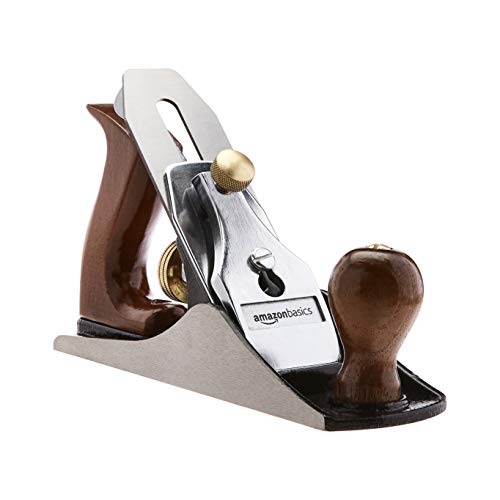 Amazon Basics No.4 Adjustable Precision Smoothing Bench Hand(Pack of 1)10 x 5.5 x 2.6 inches3.82 poundsCheck on Amazon


Understanding plane types
Hand planes come in many sizes. The block plane is small, holds a low blade angle and is used for trimming end grain, chamfering and small adjustments. The smoothing plane, often a No. 4, is a mid-sized plane used for final surfacing. A jack plane, around a No. 5, is a general-purpose tool that handles rough dimensioning and jointing edges. Longer planes such as jointers flatten long boards. For a small shop, a block plane and a smoother cover most tasks.
1. Lie-Nielsen No. 60-1/2 Low Angle Block Plane
The Lie-Nielsen No. 60-1/2 low angle block plane is a benchmark tool. It has a bronze body, a precise adjuster and a thick blade that takes a very fine edge. It cuts end grain beautifully and fits comfortably in the hand. It is expensive, and a basic block plane will do many things adequately. For woodworkers who appreciate fine tools, it is a lifetime purchase.
2. Veritas Low-Angle Block Plane
The Veritas Low-Angle Block Plane offers a lot of control, with an adjustable mouth to match the cut and a blade made from durable steel. It is often a bit less expensive than the Lie-Nielsen and performs similarly. The finish is more utilitarian. A strong choice for those who want accuracy and adjustability.
3. Stanley Bailey No. 4 smoothing plane
The Stanley Bailey No. 4 smoothing plane follows a design that has been used for generations. New production models can need tuning, including flattening the sole and sharpening the blade, but they work well after attention. Parts are widely available, and it is a good plane to learn on. The finish quality varies, so read recent reviews before buying.
4. Wood River No. 4 bench plane
The Wood River No. 4 bench plane uses a heavier casting and a thicker blade than many entry-level planes, which reduces chatter and improves performance. It sits between budget and premium. It still benefits from some tuning, and the finish is more modest than high-end brands. A good compromise for a first serious smoother.
5. Veritas Low-Angle Jack Plane
The Veritas Low-Angle Jack Plane is a versatile tool that works well on end grain, difficult grain and general stock preparation. Interchangeable blades allow different bevel angles, and the design is well engineered. It is a significant investment, and a No. 4 may feel lighter for some tasks. A good choice if you want one plane that handles many jobs.
How to choose a hand plane
Block plane first
A low-angle block plane is useful for trimming, chamfering and fitting parts. It is small, easy to use and a gateway to hand tool work.
Smoother second
A No. 4 gives you a fine surface without sanding. It is the plane most woodworkers use most often.
Quality versus tuning
Premium planes work well out of the box. Budget planes can perform nearly as well after tuning, but the process takes time and patience.
Blade steel
High-quality steel holds an edge longer, though it can be harder to sharpen. Choose what you are willing to maintain.
Comfort and balance
Hold the plane before you buy if possible. A comfortable tote and knob make long sessions easier.
Common mistakes
- Dull blades. A dull plane tears out grain and frustrates beginners.
- Setting the blade too deep. Take light cuts for control.
- Ignoring grain direction. Plane with the grain to reduce tear-out.
- Skipping tuning. A flat sole and a tight mouth improve performance.
- Buying an old plane without checking. Cracked castings and bent soles are problems.
Basic tuning steps for a new plane
Begin by disassembling the plane and cleaning off protective oil. Flatten the sole on a flat surface with abrasive paper, focusing on the area around the mouth. Flatten the back of the blade and sharpen the bevel. Check that the chip breaker fits tightly against the blade, as gaps trap shavings. Reassemble and set the blade so it projects only a hair, then adjust the lateral lever so the cut is even. Test on scrap, adjusting until you get fine, full-width shavings.
Storing planes
Store planes on their sides or retract the blade so the edge does not touch the bench. Wipe the sole with a light coat of wax to protect from rust and keep it gliding.
Planes for different jobs
Understanding which plane does what helps you decide where to spend money.
- Block plane: small, one-handed, great for end grain, chamfers and fitting.
- Smoothing plane: final surface preparation on faces and edges, leaving a polished finish.
- Jack plane: an all-purpose plane for removing material, flattening and jointing shorter edges.
- Jointer plane: long plane for straightening long edges and flattening large boards.
- Rabbet and shoulder planes: for cleaning joints and fitting tenons.
Is a hand plane still useful with power tools?
Absolutely. A hand plane is quiet, creates no dust cloud and gives you precise control for tweaking fits. Even in a shop full of machines, many woodworkers reach for a block plane daily to ease an edge or trim a joint. A smoothing plane also leaves a surface that can be superior to sanding on some woods.
Reading grain direction
Tear-out happens when the blade lifts fibers instead of slicing them. Look at the edge of the board to see which way the grain runs, and plane uphill along the fibers. If you get tear-out, reverse direction, take a lighter cut, tighten the mouth or use a higher-angle blade. Practicing on scrap teaches you to feel the difference.
Buying new, vintage or kit planes
New planes arrive ready to use and are covered by a warranty, which is reassuring for a first purchase. Vintage planes can be a bargain and are often built from excellent materials, but they need inspection for cracks, a warped sole and missing parts, and a restoration session before they perform. Some makers sell kit or lightly finished planes that require final tuning, which can be a rewarding way to learn how a plane works. Whichever route you choose, budget time for sharpening, since the plane will be only as good as its blade.
Frequently asked questions
Which plane should I buy first?
A low-angle block plane is useful, small and versatile. A No. 4 smoothing plane is the next step.
Are vintage planes worth buying?
They can be excellent value, but need inspection and restoration. Beginners may prefer new planes.
What is the difference between low-angle and standard-angle planes?
Low-angle planes bed the blade at a lower angle, which suits end grain and fine trimming. Standard-angle planes are good for general work.
How often do I need to sharpen?
Whenever the shavings become ragged or the plane requires more force. Frequent honing keeps it working well.
Conclusion
A good hand plane makes woodworking quieter and more precise. Start with a block plane and a smoother, tune them well and learn to sharpen. Premium brands give you a head start, while budget models reward patience.
As an Amazon Associate we earn from qualifying purchases.
Related guides
More from Amazon
Programs that pair well with the guide above. Offers and eligibility are set by Amazon and may change.
A free business account with business pricing and bulk-buying tools for work, shop or home office.
Create a business accountFree shipping on eligible items, Prime Video and more. Eligible new members can start with a free trial.
Start a Prime free trialAudiobooks and podcasts to listen to on the go. Eligible new members can start with a free trial.
Try Audible freeAd-free music streaming. Eligible new subscribers can start with a free trial.
Try Music Unlimited freeAs an Amazon Associate we earn from qualifying purchases.








