
Key takeaways
- Compare the best scraper planes by blade style, body size, adjustment and sole design, for smoothing figured wood and removing tear-out on fine furniture.
As an Amazon Associate I earn from qualifying purchases. This post may contain affiliate links at no extra cost to you.
A scraper plane does the one job a smoothing plane cannot promise: it flattens figured, reversing or interlocked grain without tearing fibers out of the surface. The tool is a cast body with a flat sole that holds a wide scraper blade almost upright. A thumbscrew bows the blade so its burnished edge takes a fine, controlled cut, and the sole keeps that cut level across panels, tabletops and doors. Compared with a bare card scraper, the body spares your thumbs the heat and flexing, adds downward mass, and holds a consistent setting from the first pass to the last. This guide compares five real scraper planes you can buy today: three built on the classic No. 80 cabinet scraper pattern, the original Stanley No. 80 itself, and a large scraping plane in the No. 112 tradition for bench-plane handling.
Disclosure: As an Amazon Associate, I earn from qualifying purchases. Product details were verified at the time of writing.
How to Choose a Scraper Plane
Blade style and width. Most scraper planes carry a blade about 2-3/4 inches wide, thin enough to bow under a thumbscrew yet stiff enough to hold an edge. Thin blades around 0.055 inch suit the bowing technique and take a keen burr; the thicker 0.100 inch blades on some No. 80 patterns can also be worked with a filed, unbeveled edge for heavier cleanup. Wider blades cover panels faster, and a double-edged blade doubles the work between sharpening sessions.
Body size and material. Cast iron and ductile iron bodies give the tool its working mass, and that mass is what keeps the cut smooth when the grain turns nasty. A full-size No. 80 pattern runs about 11-1/2 inches long overall, while a large scraping plane carries a shorter 9-1/2 inch body with handles and weighs roughly twice as much. Pick the format that matches your work: the open No. 80 frame for broad panels, the handled plane body for long sessions of final smoothing.
Adjustment. Every tool here bows its blade with a thumbscrew, and that single control sets the depth of cut: more bow for stock removal, less for a finishing pass. The large scraping plane adds a tilting frog that changes the blade angle itself, which changes how aggressively the edge engages the wood. Check that the clamp bar holds the blade evenly, because a blade that shifts mid-pass leaves ridges.
Sole design. The sole is the reference surface, so it should be flat and finely finished. Makers quote flatness figures on the better tools, and a precision-ground sole glides without rocking on wide glue-ups. A longer sole bridges low spots and flattens; a shorter sole follows gentle contours more easily. Keep the sole waxed and store the tool on its side so the surface stays true.
Handles and comfort. Scraping is a pushing cut that asks real effort from the arms. Closed handles, a front knob and shaped grips spread that effort out, and cork grip inserts soften long sessions. If you scrape large tabletops often, handle design matters as much as blade steel.
The 5 Best Scraper Planes
1. Rockler Bench Dog No. 80 Cabinet Scraper

The Bench Dog No. 80 is Rockler’s take on the classic cabinet scraper, and it follows the pattern faithfully: a gray iron casting with a machined sole, a high-carbon steel blade and a single thumbscrew that sets the bow. The blade arrives ready to work, and the tool ships in a fitted black storage box with instructions, which makes it the easiest starting point in this group for someone moving up from card scrapers. Spare blades are stocked under the same Bench Dog line, so keeping a second edge ready is simple. On wide panels and cabinet doors the machined sole tracks flat and the body weight does most of the pushing for you.
Specs:
– Blade: 2-3/4 in wide high-carbon steel blade, replaceable
– Body: Gray cast iron, No. 80 pattern frame
– Adjustment: Single thumbscrew bows the blade; clamp bar holds the setting
– Sole: Machined flat sole for panel work
– Extras: Fitted storage box and instructions included
2. Taytools 468327 #80 Cabinet Scraper Plane
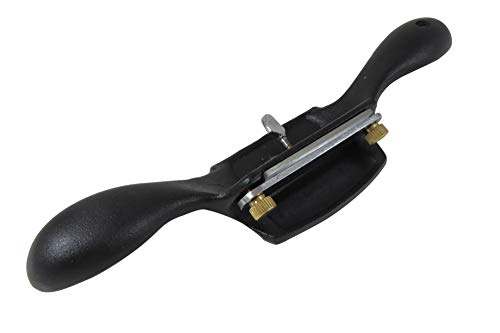
Taytools publishes the numbers most makers leave vague, and this No. 80 pattern tool is built around them. The body is stress-relieved ductile cast iron with the sole precision ground flat to within 0.001 inch over its whole length. The blade is unusually stout for the pattern at 0.100 inch thick, ground to a 25 degree angle, and the rear thumbscrew adjusts its curvature to swing between coarse cleanup shavings and fine finishing cuts. At 11-1/2 inches long and about a pound and a half, it has the footprint of the original Stanley pattern with a flatter sole than most tools in its class.
Specs:
– Blade: 2-3/4 in wide, 0.100 in thick tool steel, ground to 25 degrees
– Body: Stress-relieved ductile cast iron
– Adjustment: Rear thumbscrew sets blade curvature for coarse or fine cuts
– Sole: Precision ground flat within 0.001 in over the full length
– Size: 11-1/2 in long, about 1.5 lb
3. Melbourne Tool Company Cabinet Scraper Plane

Melbourne Tool Company redesigned the part of the cabinet scraper everyone else left alone: the handles. Cabinet scrapers demand a hard push because of their steep blade angle, so Melbourne reshaped the grip angle for a more efficient line of effort and set soft cork inserts into the handles to cushion the hands and improve grip. The cast body carries a 70 mm carbon steel blade ground at 45 degrees, and at just under a kilogram the tool is light enough for long flattening sessions on tabletops and doors. It is the comfort pick of this group, aimed at fine project work where control matters more than mass.
Specs:
– Blade: 70 mm (2-3/4 in) wide carbon steel blade, 45 degree grind angle
– Body: Cast iron body, 295 mm overall width
– Adjustment: Thumbscrew blade-bow adjustment with clamp bar
– Sole: Flat sole in the No. 80 pattern
– Weight: 903 g, with cork grip inserts in reshaped handles
4. Veritas Scraping Plane

The Veritas scraping plane follows the No. 112 layout instead of the No. 80 frame: a 9-1/2 inch ductile iron body with a hardwood front knob and rear handle, worked like a bench plane. Its frog tilts the blade through a 0 to 25 degree range, so you can tune how the edge meets reversing grain, and an integral thumbscrew bows the blade to keep its corners from tracking ridges into the surface. The included blade is 2-7/8 inches wide high-carbon steel with the edge ground at 45 degrees, and thicker A2 blades, including a toothed version for glue lines and wild grain, are made for the same body. At 4 pounds it is the heaviest tool here, and that mass pays off in a smooth, chatter-free cut.
Specs:
– Blade: 2-7/8 in wide, 0.055 in thick high-carbon steel, edge ground at 45 degrees
– Body: 9-1/2 in ductile cast iron, stress relieved, with hardwood knob and handle
– Adjustment: Tilting frog sets blade angle from 0 to 25 degrees; thumbscrew bows the blade
– Sole: Surface ground flat sole
– Weight: 4 lb; made in Canada
5. Stanley No. 80 Cabinet Scraper Plane
Every other tool in this guide traces back to this one. The Stanley No. 80 pairs a cast iron body and flat sole with a 2-3/4 inch blade clamped under a wide bar, and a single thumbscrew at the back bows the blade to set the cut. There are no extra mechanisms to learn: set the blade projection, dial in the bow, and push. The pattern stayed in production for decades because it works on veneer, figured hardwood and glue-line cleanup alike, and clean examples remain the benchmark that modern copies are measured against. This listing is a genuine Stanley No. 80 offered by a specialist hand-tool dealer.
Specs:
– Blade: 2-3/4 in (70 mm) wide steel blade
– Body: Cast iron body with japanned finish, 11-1/2 in overall length
– Adjustment: Single thumbscrew bows the blade; wide clamp bar holds it
– Sole: Flat sole in the original No. 80 pattern
– Origin: The original Stanley pattern the modern copies follow
Comparison Table
| Tool | Blade | Body | Adjustment | Sole | Weight |
|---|---|---|---|---|---|
| Rockler Bench Dog No. 80 | 2-3/4 in high-carbon steel | Gray cast iron | Thumbscrew bow | Machined flat | Not published |
| Taytools 468327 #80 | 2-3/4 in x 0.100 in tool steel | Ductile cast iron | Rear thumbscrew bow | Ground within 0.001 in | About 1.5 lb |
| Melbourne Tool Company | 70 mm carbon steel, 45 degree grind | Cast iron | Thumbscrew bow | Flat, No. 80 pattern | 903 g |
| Veritas Scraping Plane | 2-7/8 in x 0.055 in high-carbon steel | 9-1/2 in ductile cast iron | Tilting frog 0-25 degrees plus bow screw | Surface ground | 4 lb |
| Stanley No. 80 | 2-3/4 in steel | Cast iron | Thumbscrew bow | Flat, No. 80 pattern | Not published |
FAQ
What is the difference between a scraper plane and a cabinet scraper?
In daily shop language the names overlap. The No. 80 style tool is sold as a cabinet scraper, while the handled, bench-plane style tool is sold as a scraping plane. Both hold a bowed scraper blade in a cast body with a flat sole; the difference is the format, open frame versus knob-and-handle body.
Do I still need to burnish the blade?
Yes. A scraper blade cuts with a tiny turned burr, and a burnisher is what raises and refreshes that burr. The thicker blades in this group can also be filed square and used without a burr for rough cleanup, then burnished for finishing passes.
Can a scraper plane replace sanding?
On flat work it often can. A sharp scraper leaves a surface that takes finish evenly and shows no scratch pattern, and it produces shavings instead of airborne dust. Corners, profiles and end grain still call for other tools.
How is a scraper plane different from a card scraper?
A card scraper is a bare blade flexed by your thumbs, which heats up and tires your hands on big panels. The plane body holds the blade angle and bow for you, adds mass, and keeps the cut flat across wide surfaces. Cards still win inside curves and tight corners.
Which pattern should a first-time buyer pick?
A No. 80 pattern tool is the simpler machine: one thumbscrew, a wide blade and a flat sole. Choose the Bench Dog or Taytools if you want a new tool with a case or published sole flatness, and the handled Veritas format if you already work with bench planes and scrape for long stretches.
Verdict
For most workshops the Rockler Bench Dog No. 80 is the straightforward recommendation: faithful pattern, machined sole, blade ready to work and a case in the box. The Taytools #80 suits buyers who want the same pattern with a stouter blade and a sole ground to a published figure. Melbourne Tool Company’s scraper earns its place on comfort, with cork-gripped handles shaped for the hard push this cut demands. The Veritas scraping plane is the heavyweight for final smoothing, with a tilting frog no No. 80 offers. And the Stanley No. 80 remains the original pattern, still setting the standard the copies chase.
Related guides
More from Amazon
Programs that pair well with the guide above. Offers and eligibility are set by Amazon and may change.
A free business account with business pricing and bulk-buying tools for work, shop or home office.
Create a business accountFree shipping on eligible items, Prime Video and more. Eligible new members can start with a free trial.
Start a Prime free trialAudiobooks and podcasts to listen to on the go. Eligible new members can start with a free trial.
Try Audible freeAd-free music streaming. Eligible new subscribers can start with a free trial.
Try Music Unlimited freeAs an Amazon Associate we earn from qualifying purchases.








