
What's inside
As an Amazon Associate I earn from qualifying purchases. This post may contain affiliate links at no extra cost to you.
For hobbyists, the best table saw is accurate, safe to use and small enough to store. Based on specifications and reviewer feedback, the SawStop Jobsite Saw Pro is the safety leader, the DeWalt DWE7491RS is a long-standing favorite for accuracy and capacity, and the Bosch 4100XC-10 offers a very sturdy stand. The Skil, Metabo HPT and Ridgid models fill in value and compact options.
| Pick | Best for | Key feature |
|---|---|---|
| SawStop Jobsite Saw Pro | Safety-first shops | Flesh-sensing brake cartridge system |
| DeWalt DWE7491RS | All-round accuracy | Large rip capacity and a rolling stand |
| Bosch 4100XC-10 | Moving the saw often | Gravity-rise stand with a smooth fence |
| Skil SPT70WT-01 | Budget and small spaces | Lightweight benchtop design |
| Metabo HPT C10RJ | Lightweight jobsite use | Compact build with a good fence system |
| Ridgid R4514 | Larger hobby shops | Roomy table with a sturdy folding stand |
Contents
Our Top Picks
 BOSCH GTS15-10 10 Inch Portable Jobsite Table Saw10 in28.1 x 27.8 x 13.53 inches102.95 poundsCheck on Amazon
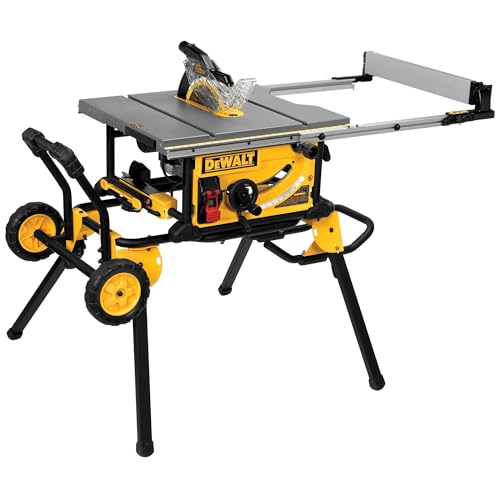
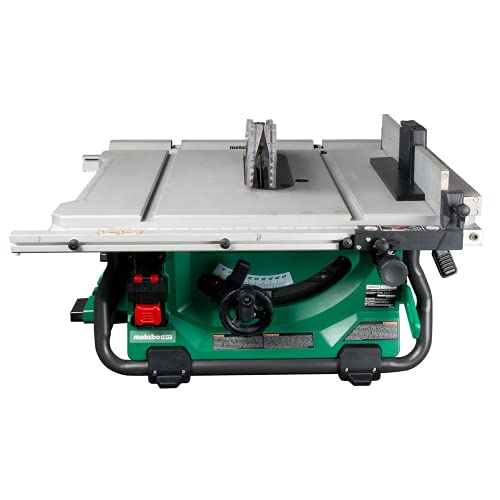
1. SawStop Jobsite Saw Pro
The SawStop Jobsite Saw Pro brings the brand’s flesh-sensing brake to a portable saw, which is valuable for anyone worried about hand injuries. If the blade contacts skin, a cartridge stops it very quickly, though the cartridge and blade must then be replaced. The saw also offers a good fence and solid build. It is heavier and more expensive than other jobsite saws, and false trips can occur with certain wet or conductive materials. For hobbyists with children around or less experience, it is a reassuring choice.
2. DeWalt DWE7491RS
The DeWalt DWE7491RS table saw is a long-running favorite for a reason. It has a generous rip capacity, a rack-and-pinion fence that locks square and a rolling stand that folds. Many hobbyists use it as their main shop saw. It is large for a portable saw, and dust collection is only adequate unless you add a shop vacuum. Consider the weight if you need to lift it into a vehicle.
3. Bosch 4100XC-10
The Bosch 4100XC-10 table saw is known for its gravity-rise stand, which makes setup quick, and for a smooth, accurate fence. It has a powerful motor and a roomy table. The saw is on the heavy side, and some users find the stand’s footprint large. A good match for woodworkers who set up and break down often.
4. Skil SPT70WT-01
The Skil SPT70WT-01 table saw is a straightforward, lighter option for those with limited space or budget. It includes a folding stand and a decent rip capacity for its size. The fence is less precise than the premium saws, and you may need to check it often. For occasional use and small projects, it is a practical entry point.
5. Metabo HPT C10RJ
The Metabo HPT C10RJ table saw is a compact jobsite saw that many users find easy to carry. It has a rack-and-pinion style fence and a straightforward design. Its capacity is smaller than larger models, so check that it fits the sheet goods you cut. A sensible lightweight pick for tight garages.
6. Ridgid R4514
The Ridgid R4514 table saw offers a roomy table, a strong motor and a fold-up stand at a price that is competitive. It suits hobbyists who want a bigger work surface. It is heavier than compact saws, and some owners recommend checking the fence alignment out of the box. A good fit for a small workshop.
How to choose a hobbyist table saw
Safety features
A riving knife, blade guard, anti-kickback pawls and a push stick are essential. Some saws add flesh-detection technology. Consider what you are comfortable with and how often you will use the saw.
Fence quality
A fence that locks parallel to the blade every time is the most important feature for accuracy. Check reviews that mention fence alignment and ease of adjustment.
Capacity and table size
Rip capacity determines the widest board or sheet you can cut. If you plan to cut full plywood sheets, check capacity or plan to break them down with a track saw first.
Dust control
Table saws produce a lot of dust. Look for a dust port that works with a shop vacuum, and consider an overhead guard with dust extraction.
Weight and portability
If you move the saw regularly, weight and stand design matter. If it stays in one place, a heavier saw is more stable.
Common mistakes
- Skipping the riving knife. It prevents kickback by keeping the kerf open.
- Standing behind the blade. Stand slightly to the side of the cut line.
- Using the fence as a stop with a crosscut. Use a sled or miter gauge, and do not trap offcuts.
- Using the wrong blade. A general-purpose blade is not ideal for plywood or fine crosscuts.
- Ignoring dust and hearing protection. Table saws are loud and dusty.
Setting up your saw for accurate cuts
Even a good saw needs setup. Check that the blade is parallel to the miter slot, since any mismatch causes burning and kickback. Make sure the fence locks parallel to the blade, and test with scrap before cutting a project. Use quality blades matched to the work, such as a thin-kerf rip blade for low-power saws. Keep the table clean and waxed so wood slides smoothly. Replace worn throat plates, since zero-clearance inserts reduce tear-out.
Accessories that make a real difference
A good crosscut sled, a set of push sticks and featherboards add safety and accuracy. A mobile base or stand helps in a cramped shop, and outfeed support makes long boards easier to handle.
Blades, sleds and safe habits
The blade is as important as the saw. A sharp, quality blade cuts cleaner and requires less force, which makes the saw safer. Match the blade to the task: a ripping blade for cutting along the grain, a crosscut blade for cutting across it and a combination blade if you want one blade for everything. Keep spare blades on hand, and have dull ones sharpened or replaced.
Build a crosscut sled
A sled is one of the best accessories you can build. It rides in the miter slots and holds the workpiece securely, which gives accurate, repeatable crosscuts and keeps your hands far from the blade. There are many free plans, and building one is a great beginner project.
Develop safe habits
Always use the riving knife for through cuts. Stand to the side of the blade, never directly behind the board, and keep your hands out of the blade path. Use push sticks and push blocks for narrow cuts, and let the blade stop completely before reaching near it. Never reach over a spinning blade, and never cut freehand. Unplug the saw before changing blades.
Frequently asked questions
Is a jobsite saw good enough for a home shop?
For many hobbyists, yes. Modern jobsite saws can be accurate and powerful. A cabinet saw offers more stability and dust control but needs more space and cost.
Are SawStop saws worth it?
If safety is a major concern, the brake system offers real peace of mind. The trade-offs are price, weight and the cost of replacing cartridges after a trigger.
What blade should I buy first?
A good general-purpose or combination blade with a suitable tooth count is a sensible choice. Add specialized blades later.
Can I cut plywood on a small table saw?
Yes, with proper support. Many woodworkers break down full sheets with a circular saw or track saw first.
Conclusion
For safety, the SawStop Jobsite Saw Pro leads. For capacity and accuracy, the DeWalt DWE7491RS and Bosch 4100XC-10 are strong, and the Skil, Metabo HPT and Ridgid saws suit other needs. Choose based on your shop space, safety priorities and the work you do.
As an Amazon Associate we earn from qualifying purchases.
Related guides
More from Amazon
Programs that pair well with the guide above. Offers and eligibility are set by Amazon and may change.
A free business account with business pricing and bulk-buying tools for work, shop or home office.
Create a business accountFree shipping on eligible items, Prime Video and more. Eligible new members can start with a free trial.
Start a Prime free trialAudiobooks and podcasts to listen to on the go. Eligible new members can start with a free trial.
Try Audible freeAd-free music streaming. Eligible new subscribers can start with a free trial.
Try Music Unlimited freeAs an Amazon Associate we earn from qualifying purchases.








