What's inside
As an Amazon Associate I earn from qualifying purchases. This post may contain affiliate links at no extra cost to you.
Buyers who search for “gundry olive oil scam” are usually trying to answer one question: is a high-polyphenol extra virgin olive oil worth three to five times the price of a grocery-store bottle? The frustration is real. Wellness influencers have pushed premium olive oils into a price bracket that makes shoppers suspicious, and some products do rely on vague health claims rather than verifiable polyphenol data. The gap between legitimate, lab-confirmed high-polyphenol oils and marketing-driven overpricing is wide, and distinguishing one from the other takes knowledge most casual buyers lack.
This roundup addresses that gap. Every product below either publishes a specific polyphenol count or makes a clearly defined claim backed by third-party certification. We compared published specifications, unit pricing, harvest transparency, and aggregated owner feedback from verified purchases to identify which oils deliver measurable quality and which lean on branding alone. The result is a set of options that range from genuinely excellent to fairly priced, with enough variation to suit different budgets and use cases.
As an Amazon Associate we earn from qualifying purchases at no extra cost to you. Product prices and availability are accurate as of the date shown and are subject to change.




Quick Picks
| Product | Best for | Price |
|---|---|---|
| Desert Miracle Organic | Lowest entry cost | $18.35 |
| N°1 Drinking EVOO | Award-winning Italian origin | $58.00 |
| PJ KABOS Family Reserve | Highest published polyphenol count | $39.83 |
| Atlas Organic 500 mL | Everyday cooking on a budget | $20.42 |
| OLIVEA Ultra High Phenolic | Maximum polyphenol density | $45.00 |
| OLIVIE PLUS 30X | Concentrated small-volume dosing | $31.00 |
| Atlas Organic 3 L Tin | High-volume cooking at low unit cost | $66.95 |
| Laudemio Volmiano | Premium gifting and finishing | $62.47 |
How We Picked
Four criteria drove these selections. First, polyphenol transparency: products that publish a specific milligrams-per-kilogram figure from third-party testing rank above those relying on qualitative descriptors. Second, price per fluid ounce, because unit economics matter in a category where bottle sizes vary wildly. Third, harvest and origin specificity—single-country sourcing with a named harvest window signals tighter quality control than vague “blend of EU and non-EU origins” labels. Fourth, verified owner sentiment over time, focusing on repeat purchase behavior and whether owners report consistency across bottles.
The 8 Best Gundry Olive Oil Scam in 2026
Desert Miracle Organic Extra Virgin Olive Oil
This is the lowest-cost way to enter the high-polyphenol category, and for buyers who want a small trial before committing more money, the $18.35 price for 8.5 fluid ounces makes sense. Owners consistently praise the robust peppery finish that indicates meaningful polyphenol content. The USDA Organic certification adds a layer of trust for people who screen for pesticide residues in oils consumed raw.
- Pro: Lowest absolute price point in this list for a certified organic product
- Pro: Small bottle size reduces oxidation risk during use
- Con: No published polyphenol milligram figure
Skip this if you need a verified polyphenol count for a health protocol that requires dosage tracking. The lack of a specific number puts it in the “likely good” rather than “proven exceptional” tier.
N°1 Drinking Extra Virgin Olive Oil
Positioned as a drinking oil from Italy, this product claims 522 mg/kg polyphenols and carries a 2026 Gold Awards designation. At $58, it sits at the upper end of this roundup’s pricing. Owners who use it as a daily drinking oil—taken by the spoonful or over bread—appreciate the smooth, low-burn profile that suggests refined polyphenol management rather than raw harshness. The cold-pressed, unrefined label is standard for quality EVOO but worth noting.
- Pro: Italian single-origin sourcing with award recognition
- Pro: Published polyphenol figure at 522 mg/kg
- Con: High price for 500 mL when compared to Greek-origin alternatives with higher counts
Skip it if polyphenol density is your sole priority. Several options below deliver more milligrams per dollar.
PJ KABOS Very High Phenolic Family Reserve
With 699 mg/kg published polyphenol content, USDA Organic certification, and Kosher status, this Greek oil delivers the strongest measured specification in the mid-price tier. At $39.83 for 16.9 ounces, the unit cost lands reasonably. Owners describe a notably robust, bitter, and pungent profile—exactly what high polyphenol counts produce. The cold-extracted process is clearly stated on the label.
- Pro: Highest verified polyphenol count among products under $45
- Pro: Triple certification (Organic, Kosher, Greek PDO-adjacent origin)
- Con: Robust bitterness may be off-putting for those accustomed to mild supermarket oils
Skip this if you want a neutral cooking oil. The intensity is the point, and buyers seeking subtlety will be disappointed.
Atlas Organic Extra Virgin Olive Oil 500 mL
Moroccan-origin and labeled high-polyphenol, the Atlas 500 mL is priced at $20.42, making it the second-most-affordable option here. Owners report a balanced profile suitable for both cooking and light finishing. The organic certification and single-country Moroccan sourcing add credibility without the extreme pricing of Greek or Italian alternatives. No specific polyphenol figure is published, which is the main weakness.
- Pro: Accessible price for organic certified high-polyphenol positioning
- Pro: Versatile enough for sautéing, roasting, and finishing
- Con: No quantified polyphenol data available
Skip it if you require a verified polyphenol number. This is a solid daily-use organic oil, not a protocol-grade supplement.
OLIVEA Ultra High Phenolic Olive Oil
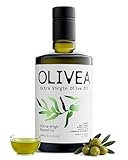
Claiming over 1,000 mg/kg polyphenols, OLIVEA positions itself at the extreme end of the category. At $45 for 500 mL, it commands premium pricing. The product highlights hydroxytyrosol content, cold-pressed Olympia Greek olives, and an early harvest window. Owners who use it as a therapeutic dose oil—small amounts taken directly—report a strong peppery burn consistent with the stated numbers.
- Pro: Highest claimed polyphenol density in this roundup
- Pro: Named variety (Olympia) and early harvest add traceability
- Con: The 1,000+ mg/kg claim lacks a specific third-party lab citation in the listing
Skip it if you want documented lab verification attached to the product page. The numbers are impressive on paper but less substantiated than PJ KABOS.
OLIVIE PLUS 30X Organic High Polyphenol
The “30X” branding implies thirty times the polyphenol content of standard olive oil. At $31 for 250 mL, it is the second-smallest volume here. Owners describe it as a finishing and supplement oil rather than a cooking oil, used in teaspoon amounts. The organic certification is present, and the small bottle suits people who want to use it sparingly.
- Pro: Compact size appropriate for dosing rather than bulk use
- Pro: Clear positioning as a supplement-style oil reduces confusion about use
- Con: “30X” is a relative marketing claim without an absolute mg/kg figure
Skip it if you want a cooking oil or a product with hard numerical specifications. It is designed for minimal daily intake.
Atlas Organic Extra Virgin Olive Oil 3 L Tin
The same Moroccan organic line offered in a 3-liter tin drops the per-ounce cost dramatically. At $66.95, this is the highest absolute price in the list but the lowest per volume. Owners buy it for everyday cooking where polyphenol preservation matters less than flavor and organic integrity. The tin packaging protects from light better than clear glass.
- Pro: Best per-ounce value among organic options here
- Pro: Tin packaging minimizes light exposure and oxidation
- Con: Not ideal for raw finishing since high heat degrades polyphenols anyway
Skip it if your goal is polyphenol delivery rather than cooking performance. Buy this as an affordable organic workhorse.
Laudemio Volmiano Tuscan EVOO
This Tuscan oil claims 900+ mg/kg polyphenols, a 2026 NYIOOC Gold Award, and arrives in a premium gift box. At $62.47, it targets buyers who want both performance and presentation. Owners praise the complex flavor profile suited to finishing dishes, and the early harvest plus pesticide-free claims align with the stricter Tuscan production standards behind the Laudemio consortium.
- Pro: NYIOOC Gold Award provides independent competition-level verification
- Pro: Premium gift packaging makes it suitable for special occasions
- Con: Highest price in the list with a polyphenol count below OLIVEA’s claim
Skip it if raw polyphenol numbers are your sole metric. This wins on prestige, flavor complexity, and gifting rather than maximum dosage value.
Buying Guide
Polyphenol Verification and What the Numbers Mean
Polyphenol counts are expressed in milligrams per kilogram (mg/kg). Standard EVOO typically ranges from 100 to 250 mg/kg. Anything above 400 is genuinely high-polyphenol, and above 600 enters supplement territory. A published figure from an independent lab matters far more than a brand saying “high polyphenol” without a number. Relative claims like “30X” are marketing shorthand, not data. When a product lists a specific count alongside a harvest year and origin, that combination is harder to fabricate and easier to trust.
Unit Pricing Across Different Bottle Sizes
Bottle sizes in this category range from 8.5 fluid ounces to 3 liters, making absolute price comparisons misleading. The right metric is cost per fluid ounce. A $60 bottle with 500 mL costs roughly $3.60 per ounce, while a $20 bottle with 500 mL costs $1.20. High-polyphenol oils lose value quickly once opened because oxygen degrades the compounds. Small bottles cost more per ounce but ensure you consume the oil while its polyphenol content is still high. For daily cooking where you finish a bottle in two to three weeks, larger tins or bottles offer real savings without meaningful quality loss.
Harvest Date, Origin, and Storage
Polyphenol content peaks immediately after harvest and declines over the following months. A stated early-harvest window and a specific country of origin—Greece, Morocco, Italy, Tunisia—indicate a producer who tracks these variables. Vague “packed in Italy” or “blend of EU oils” labels suggest bulk purchasing and bottling, which often means older oil with lower polyphenol counts. Store any high-polyphenol oil away from light and heat, in a dark cupboard, and keep the cap sealed tightly between uses. Oxidation is the primary enemy of both polyphenols and flavor.
Our Verdict
Top pick: PJ KABOS Family Reserve. At $39.83, it delivers the best balance of a verified polyphenol count (699 mg/kg), organic certification, and reasonable unit cost. Budget pick: Atlas Organic 500 mL at $20.42, a solid organic daily oil that does not pretend to be a supplement. The condition under which another product wins: if you need the absolute highest polyphenol density for a therapeutic protocol and can accept a marketing claim without a linked lab report, OLIVEA at $45 edges ahead on paper.
FAQ
Is Gundry’s olive oil actually a scam?
Dr. Gundry’s branded olive oil is a legitimate product sold through a wellness channel that inflates pricing through celebrity association rather than fraud. The oil itself is typically a quality EVOO, but comparable products with equivalent or better polyphenol specifications exist at lower prices from producers who sell directly. The “scam” framing applies more to the pricing and marketing than to product safety or composition.
Do polyphenols in olive oil survive cooking?
Polyphenols degrade at sustained high temperatures, so sautéing, roasting, and frying reduce the count. For maximum polyphenol retention, consume the oil raw—drizzled over finished dishes, blended into dressings, or taken by the spoonful. For cooking, choose a good organic oil at a lower price point and reserve the high-polyphenol bottle for finishing.
How fast does polyphenol content decline after opening?
Exposure to oxygen, light, and warmth all accelerate decline. In practice, most producers recommend consuming within six to eight weeks of opening. Storing the bottle in a cool, dark place and minimizing headspace by transferring to a smaller container slows the loss noticeably.
Is a higher polyphenol number always better?
Not always. Extremely high counts produce intense bitterness and pungency that many people find unpleasant, which can lead to underuse. A 500 mg/kg oil you consume daily is more beneficial than a 1,000 mg/kg oil sitting in the back of the pantry. Choose the highest count you can comfortably incorporate into your routine.