What's inside
As an Amazon Associate I earn from qualifying purchases. This post may contain affiliate links at no extra cost to you.
Tapping into municipal water without a filter means swallowing chlorine byproduct, sediment, and in some regions lead from aging pipe connections. A pitcher with a certified media block sits on the counter, fills from the faucet, and delivers a glass of cleaner water in minutes — no installation, no electricity, no contract. The category is deceptively simple: every unit looks like a jug with a filter, yet contaminant reduction varies enormously depending on the certification standard behind the claims.
The eight pitchers compared here span from $13.99 to $49.99 and serve households ranging from one person to a small office. What separates a worthwhile purchase from a regrettable one is whether the filter is independently certified to NSF/ANSI 42 or 53 (or both), how many cups it actually holds after accounting for the reservoir geometry, and how the replacement cartridge affects the real cost per gallon. Owner feedback over multiple product cycles reveals which designs leak from the spout, which lids crack under dishwasher heat, and which filters genuinely slow the flow enough to matter. This roundup in 2026 weighs those published specifications and recurring complaint patterns so readers can narrow the field without guessing.
As an Amazon Associate we earn from qualifying purchases at no extra cost to you. Product prices and availability are accurate as of the date shown and are subject to change.



Quick Picks
| Product | Best for | Price |
|---|---|---|
| Waterdrop PT-07B 10-Cup | Largest capacity per dollar | $16.97 |
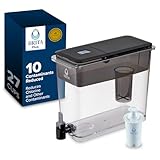
| Brita X-Large 27-Cup Dispenser | Office or large family use | $37.97 |
| Brita Large 10-Cup | Everyday household balance | $28.33 |
| Brita Small 6-Cup | Apartment or travel | $20.99 |
| Brita XL 27-Cup Ultramax | Maximum filtered volume | $49.99 |
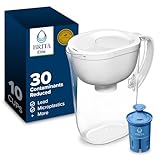
| Brita Large 10-Cup Elite | Lead and microplastic reduction | $36.99 |
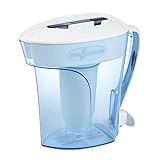
| ZeroWater 10-Cup | PFOA/PFAS removal focus | $28.99 |
| Waterdrop PT-05B 7-Cup | Lowest entry price | $13.99 |
How We Picked
Three criteria drive the shortlist. First, certification level: a pitcher that reduces chlorine taste (NSF 42) does not automatically reduce lead (NSF 53), and owners who need the latter must not confuse the two claims. Second, usable capacity versus listed capacity — the reservoir sits above the filter, so the number printed on the box is not what reaches the glass. Third, real-world ownership patterns: recurring complaints about spout leaks, fragile flip-lids, and short filter life signal design choices that specs alone do not capture.
The 8 Best Water Filter Pitcher Reviews in 2026
Waterdrop PT-07B 10-Cup
For budget-conscious households that want NSF-certified filtration without paying a brand premium. Waterdrop entered the pitcher market aggressively, and the PT-07B delivers a full ten-cup volume with blue-and-clear aesthetics that read more expensive than the price suggests.
- Pro: NSF certification at under seventeen dollars is rare in this capacity tier.
- Pro: Wide-mouth reservoir fills quickly from a standard faucet.
- Con: Replacement filters are less universally stocked than Brita or ZeroWater cartridges, so plan ahead.
Skip it if your household has heavy daily use and you want the convenience of buying replacement filters at any grocery store.
Brita X-Large 27-Cup Dispenser
Geared toward offices, gyms, or families of five-plus who need continuous cold filtered water without refilling every two hours. The dispenser form factor differs from traditional pitchers — it sits taller and includes a push-button tap at the base.
- Pro: One fill lasts a full workday for most users.
- Pro: Fits standard refrigerator shelves despite its height.
- Con: The tap mechanism accumulates mineral deposits and requires periodic disassembly to clean.
Skip it if refrigerator space is tight; its footprint is wider than a pitcher of comparable capacity.
Brita Large 10-Cup
The default choice for two-to-four-person households already comfortable with the Brita ecosystem. Bright White finish keeps the kitchen counter looking neutral, and the standard filter interface means replacements are available in every supermarket and hardware store.
- Pro: Filter availability and compatibility reduce long-term friction.
- Pro: Flip-lid design allows one-handed filling.
- Con: Basic filter targets chlorine and particulates only; lead reduction requires the Elite cartridge upgrade.
Skip it if your primary concern is heavy metals rather than taste and odor.
Brita Small 6-Cup
Ideal for students, single professionals, or anyone whose refrigerator shelf is measured in inches. The six-cup rating means it empties faster, but the compact silhouette justifies the trade-off for space-limited kitchens.
- Pro: Fits under most refrigerator door shelves and on narrow countertops.
- Pro: Lighter when full, easier for smaller users to carry.
- Con: Requires more frequent refilling in multi-person households.
Skip it if two or more adults drink filtered water daily; you will fill it twice a day.
Brita XL 27-Cup Ultramax
Positioned at the premium end of Brita’s lineup, the Ultramax pairs the 27-cup volume with the company’s highest-grade Plus filter. For users who want maximum throughput and the broadest contaminant list in one Brita package, this is the top configuration.
- Pro: Plus filter covers more contaminant categories than the standard Brita cartridge.
- Pro: The 27-cup reservoir means fewer fill cycles than any other Brita model.
- Con: Fifty dollars at launch price makes it the most expensive unit in this roundup.
Skip it if you want to minimize upfront spend and are willing to accept the Elite pitcher’s smaller volume for broader certifications.
Brita Large 10-Cup Elite
The certification standout. WQA and NSF/ANSI dual verification with explicit 99% lead reduction and microplastic targeting places it in a narrow tier few pitchers at this price occupy. BPA-free construction addresses a common health concern among plastic-container buyers.
- Pro: Reduces thirty listed contaminants, including lead, PFOA, and PFAS compounds.
- Pro: White finish and 10-cup size fit standard refrigerator doors without crowding.
- Con: Elite filters cost more per unit than standard Brita replacements, raising long-term operating expense.
Skip it if your water report shows minimal lead risk and you only want to improve taste.
ZeroWater 10-Cup
Built around a five-stage ion-exchange system that strips total dissolved solids to near zero on the included TDS meter. The explicit PFOA/PFAS reduction claim draws households in areas where those “forever chemicals” appear in municipal supply.
- Pro: TDS meter lets you verify filter performance at any moment.
- Pro: PFOA/PFAS reduction targets a contaminant class many competitors ignore.
- Con: Five-stage filtration slows flow rate noticeably compared to single-cartridge pitchers.
Skip it if you want fast dispense and do not need the absolute lowest TDS reading.
Waterdrop PT-05B 7-Cup
The lowest-priced NSF-certified option here at fourteen dollars. A seven-cup volume suits one-person households that prioritize safety certification over capacity and want to enter filtered water with minimal financial commitment.
- Pro: NSF certification at under fifteen dollars is unmatched in this list.
- Pro: Compact footprint and lightweight when full.
- Con: Seven cups means frequent refills for anything beyond solo use.
Skip it if household demand exceeds one liter per day or you prefer widely available replacement filters.
Buying Guide
Matching Capacity to Household Size
Pitchers list volume in cups, but the usable figure is lower once the upper reservoir and filter housing displace water. A 10-cup pitcher delivers roughly eight to nine cups to the glass. For two adults each drinking two liters of filtered water daily, a 10-cup unit needs refilling at least once a day. A 27-cup model extends that to two or three days. Count your daily liters, divide by four (cups per liter), and choose the next size up.
Understanding Certification Standards
NSF/ANSI 42 covers aesthetic improvements — chlorine taste, odor, and particulate matter. NSF/ANSI 53 covers health-based contaminants including lead, arsenic, PFOA, and PFAS. A pitcher that lists only 42 will not reduce lead regardless of marketing language. The Brita Elite and Waterdrop models here carry explicit 53 or WQA verification, while standard Brita pitchers rely on 42 unless paired with the Elite cartridge. Check your local water-quality report before deciding which standard you actually need.
Calculating True Cost Per Gallon
The sticker price is the entry fee; filter replacement determines your long-term cost. A Brita Standard filter rated for forty gallons at retail price works out to roughly five cents per gallon, while a ZeroWater five-stage element rated for twenty to thirty gallons can reach twelve to fifteen cents. Multiply the listed filter-life gallons by the per-replacement cost and divide to compare. Waterdrop and Brita Elite cartridges sit in the middle band, and availability in your region affects the real expense when replacements require shipping.
Our Verdict
The top pick is the Brita Large 10-Cup Elite: it offers the broadest certified contaminant reduction in a practical daily size, and its dual NSF/WQA validation removes the guesswork for households with aging plumbing. The budget pick is the Waterdrop PT-05B 7-Cup at $13.99 — NSF-certified protection at the lowest entry cost here. However, if your household numbers five or more and you need filtered water available around the clock, the Brita X-Large 27-Cup Dispenser wins on volume-per-fill alone, because no pitcher in this list matches its reservoir in a form factor that still fits a refrigerator shelf.
FAQ
Can a water filter pitcher remove all contaminants?
No. Pitcher filters are designed for targeted reduction — typically chlorine, sediment, and in certified models, lead and certain industrial chemicals. They do not eliminate dissolved minerals that produce hardness, nor do they address microbiological threats like bacteria or viruses.
How often should I replace the filter?
Most manufacturers specify replacement every two months or forty gallons, whichever comes first. The Brita Elite and ZeroWater elements have shorter rated lives due to their more complex media, while Waterdrop and standard Brita filters follow the two-month baseline.
Are BPA-free pitchers actually necessary?
Current FDA-approved plastics used in food-contact containers are BPA-free by default in most new product lines. The label on the Brita Elite signals that the manufacturer verified the resin specifically, which provides a small peace-of-mind benefit if you fill the pitcher with warm water or store it in a warm kitchen.
Does filtered pitcher water taste better than bottled?
Pitchers that reduce chlorine (all models here achieve this) remove the dominant off-flavor in municipal water. Mineral taste varies by source: ZeroWater strips everything and can taste “flat,” while standard Brita leaves beneficial calcium and magnesium intact, producing a mouthfeel many owners describe as closer to spring water.