
Our Top Picks


What's inside
As an Amazon Associate I earn from qualifying purchases. This post may contain affiliate links at no extra cost to you.
A combination square looks like the simplest tool in the shop, and that is exactly why buyers get it wrong. One blade, one sliding head, a few graduations: it marks 90 and 45 degrees, sets depths, and checks whether a board edge is flat or square. The decision behind this keyword is about blade length, head material, and how the scale is engraved, because those three choices decide whether the tool disappears into your workflow or fights it.
This roundup is for hobbyists building their first set of layout tools, cabinet and furniture makers who want a dependable reference, and anyone replacing a worn square with a bent blade. We compare eight models in the 6 to 16-inch range using only what the listings state. Treat 2026 as a good moment to check your current square against a known straight edge before spending anything.
Contents
Quick Picks
As an Amazon Associate we earn from qualifying purchases at no extra cost to you.


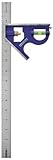

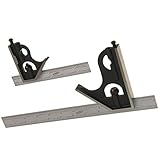

| Product | Best for | Key feature from the title |
|---|---|---|
| IRWIN 12″ Metal-Body (1794469) | All-around shop layout | 45-90 degree marking, stainless steel |
| Swanson 6 in. TC130 | Small joinery work | Zinc head, stainless blade, 1/8 and 1/16 graduations |
| Arrow 12-Inch Combo Square | Quick checks for level and square | Bubble level, zinc alloy body |
| IRWIN 6-Inch (1794468) | Tight spaces and setup blocks | Metal body, 6-inch blade |
| IRWIN 16-Inch (1794471) | Wide panels and framing | Metal body, 16-inch blade |
| Accusize 12″ Set (0000-8101) | Machinist-style layout | Protractor head, 4-R graduation |
| iGaging 6″ and 12″ Set | Two sizes in one purchase | 4R steel blades, high precision |
| Swanson 12 in. TC132 | Finish carpentry and stairs | Zinc head, stainless blade, 12 in. length |
How to Choose
Blade length that matches your work
A 12-inch blade covers most furniture and cabinet tasks, from marking tenon shoulders to checking a drawer front. A 6-inch version is easier to hold steady on small stock and fits inside a drawer-making kit, while 16 inches helps on wide boards and panel layout. If you can only own one, 12 inches is the practical default. Longer blades flex more under pressure, so a short square is often steadier for precise marks on narrow parts.
Head material and accuracy
Zinc and cast metal heads are common at this level. What matters more is whether the head sits flat on the blade without wobble and whether the locking knob holds. Look for a hardened scale, a machined 90-degree face, and a head that slides smoothly but locks firmly. A head that rocks even slightly on the blade will translate into a layout error that grows with the length of the line.
Graduations and readability
Etched graduations last longer than printed ones, since printing wears away under your thumb. Fine increments such as 1/16 in. help with joinery, while 4R-style graduations suit those who work in fine fractions and decimals. A satin finish reduces glare under shop lights. Make sure the markings start at a clean zero edge, since a blade that has been cut or ground can shift the reference point.
What to ignore, and where cheaper tools cut corners
Extra accessories such as a scribe or a small level are handy but secondary. Budget squares tend to skimp on flatness of the blade, tightness of the lock, and consistency between the head and ruler. Always check the square yourself by drawing a line, flipping the tool, and confirming both lines match. Do this once on arrival and again after any drop.
The 8 Best Options
IRWIN Combination Square 12-Inch (1794469)
A reliable generalist for shop layout. The listing describes a metal body, 12-inch blade, 45 to 90 degree marking, and stainless steel construction. It suits woodworkers who want one familiar, well-known size and plan to use it for everything from marking a shoulder line to setting a blade height at the table saw.
- Strength: stainless blade resists rust in a humid shop
- Strength: 12 inches covers most furniture tasks
- Trade-off: no level or extras mentioned
Skip it if you want a built-in bubble level.
Swanson 6 in. Combination Square (TC130)
Compact and precise for small joinery. The listing mentions a zinc head, stainless blade, precision-machined 45 and 90 degree faces, and inch graduations etched in 1/8 and 1/16 in. Dovetail and box-joint makers often reach for this length because it fits neatly across narrow stock.
- Strength: etched graduations stay readable over time
- Strength: short blade is easy to control on small parts
- Trade-off: limited reach on wide boards
Skip it if you mostly handle large panels.
Arrow 12-Inch Combination Square
Aimed at general carpentry and household projects, with a stainless steel ruler, a zinc alloy body, and a bubble level. It appeals to buyers who want a bit of everything in one tool, such as a weekend builder who also hangs shelves and checks door frames.
- Strength: bubble level adds a quick plumb or level check
- Strength: 12-inch blade handles common furniture tasks
- Trade-off: aimed at general use rather than precision joinery
Skip it if you want a tool described for fine layout work.
IRWIN Tools Combination Square 6-Inch (1794468)
The short IRWIN, a compact companion for small-parts layout and for setting router or saw heights. The listing shows a metal body and 6-inch blade, in the blue finish the family is known for.
- Strength: easy to carry in an apron pocket
- Strength: same family as the 12 and 16-inch versions
- Trade-off: little detail on graduations in the title
Skip it if you only want one square for the whole shop.
IRWIN Tools Combination Square 16-Inch (1794471)
The longest blade in this list, useful for wide panels, framing, and layout across bigger stock. The listing shows a metal body and 16-inch length. It helps when you need to carry a square line across a wide tabletop glue-up or check a long rail.
- Strength: extra reach for large boards
- Strength: matches other IRWIN sizes for a consistent kit
- Trade-off: heavier and less nimble at the bench
Skip it if you mostly build small boxes and drawers.
Accusize Industrial Tools 12″ Combination Square Set
This one comes from a machinist-leaning brand. The title lists a 12-inch ruler with a protractor head, satin finish, and 4-R graduation, making it an angle-friendly choice for anyone laying out miters, bevels, or odd-angle joinery.
- Strength: protractor head measures angles beyond 45 and 90
- Strength: satin finish reduces glare
- Trade-off: more parts means more to keep track of
Skip it if you only need a simple square.
iGaging Combination Square Set 6″ and 12″
A two-size set for buyers who want short and long blades together. The title lists 4R steel blades and calls them high precision. Buyers who like to keep a short square at the bench and a longer one by the saw may find this pairing convenient.
- Strength: two lengths cover most layout needs
- Strength: steel blades with 4R graduations
- Trade-off: less listed detail about head material
Skip it if you already own a good 12-inch square.
Swanson 12 in. Combination Square (TC132)
A 12-inch blade sized for finish carpentry, cabinetry, and stair layout, with a zinc head and stainless blade. It pairs naturally with the 6-inch TC130, and the matching graduations make moving between the two feel seamless.
- Strength: described for finish and stair work
- Strength: stainless blade resists corrosion
- Trade-off: no bubble level or protractor
Skip it if you want multi-function extras.
Which One Fits Your Situation
A first square for a home shop
The IRWIN 12″ (1794469) offers the most useful size in a familiar format, with a stainless blade that tolerates a damp garage. Add the 6-inch IRWIN later if small parts start to dominate your projects.
Cabinet and drawer work
Pair the Swanson 6 in. TC130 with the Swanson 12 in. TC132, which gives short and long reference blades with matching etched graduations.
Angle work and mixed layout
The Accusize 12″ set adds a protractor head, while the iGaging 6″ and 12″ set offers two blade sizes at once.
Common Mistakes
- Trusting a new square without checking it against a known straight edge
- Choosing a long blade when most work is small joinery
- Over-tightening the lock knob and distorting the head
- Using the square as a chisel or pry bar
- Storing it loose where the blade can bend or the edge can nick
Related guides
- Cordless Drills For Woodworking Beginners
- Woodworking Supplies For Beginners
- Marking Gauges For Woodworking
Frequently Asked Questions
How do I check whether a combination square is accurate?
Draw a line along the blade against a straight board edge, flip the head, and draw again. If the lines overlap exactly, the 90-degree face is true. A visible gap between the two lines shows the error, and doubling it tells you how far off the tool really is.
Is a bubble level worth having?
It is handy for quick plumb checks but secondary to head flatness and blade quality. Many woodworkers keep a separate level, so treat the vial as a bonus rather than the reason to buy.
Which length should I buy first?
Twelve inches is the common starting size. Add a 6-inch blade later for small parts, or a 16-inch one if wide panels become routine.
Do etched marks matter?
Yes. Etched or engraved scales resist wear from fingers and wood dust better than printed ones, and they stay legible after years of shop use.
Related guides
More from Amazon
Programs that pair well with the guide above. Offers and eligibility are set by Amazon and may change.
A free business account with business pricing and bulk-buying tools for work, shop or home office.
Create a business accountFree shipping on eligible items, Prime Video and more. Eligible new members can start with a free trial.
Start a Prime free trialAudiobooks and podcasts to listen to on the go. Eligible new members can start with a free trial.
Try Audible freeAd-free music streaming. Eligible new subscribers can start with a free trial.
Try Music Unlimited freeAs an Amazon Associate we earn from qualifying purchases.








