What's inside
As an Amazon Associate I earn from qualifying purchases. This post may contain affiliate links at no extra cost to you.
The short answer: the best outdoor storage bench is one that keeps your contents dry, holds the weight of the people who sit on it, fits the space you have and survives your local weather without constant repair. For most households that means a resin or composite bench for low upkeep, or a well-finished hardwood bench when appearance matters and you are willing to maintain it. Metal-framed and wicker-style options suit particular looks. Whatever the material, pay close attention to the lid, the seals, the ventilation and the stated seating capacity.
This guide does not rank products. It explains the main bench types, how to judge real storage capacity, what separates a weather-resistant lid from a leaky one, and what to check for safety, especially where children are around. It also touches on building your own bench for woodworkers. Use it to narrow your choices, then compare current listings against your patio, deck or porch.
Contents
Our Top Picks
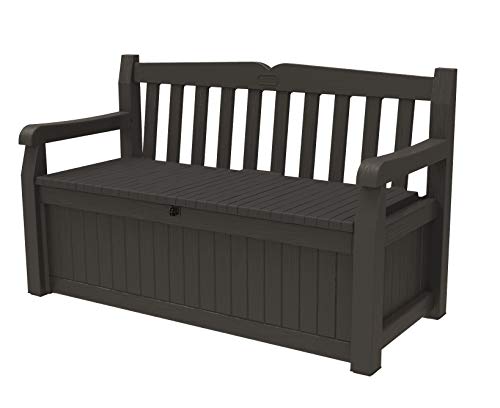 Keter Solana 70 Gal Outdoor Storage Bench for54.6x23.4x32.8 inches54.6 x 30.4 x 32.8 inches31.97 poundsCheck on Amazon
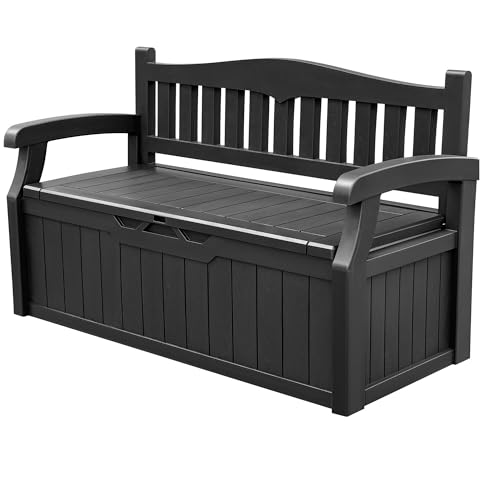 Devoko 80 Gallon Storage Bench Deck Box Waterproof&Lockable80 Gallon without Cushion22.6 x 52.8 x 32.3 inches44.1 poundsCheck on Amazon
Contents
- What an outdoor storage bench is for
- Materials compared
- Size, capacity and what fits inside
- Weatherproofing, lids and ventilation
- Seating comfort and strength
- Placement, assembly and ground
- Building your own
- Safety notes
- Buyer checklist
- Mistakes to avoid
- Frequently asked questions
- Bottom line
What an outdoor storage bench is for
A storage bench pulls double duty. It gives guests somewhere to sit, and it swallows the clutter that tends to collect around a patio: cushions, garden gloves, children’s toys, watering cans, pool accessories and the odd extension cord. A good one tidies the space and protects those items from rain and sun.
Before comparing models, list what you want to store. Soft items such as cushions and throws need dryness and airflow. Tools and chemicals need security and a different level of caution. Toys and sports gear need easy access. Your list tells you how much volume you need, how the lid should open and how much ventilation to demand.
Bench, deck box or both
A deck box is a storage container that can be sat on, but many are not designed primarily for seating comfort. A storage bench is shaped like a bench, with a flat seat, sometimes a back and sometimes arms. If you plan to seat adults regularly, favour a bench built for it. If you mainly need volume, a deck box may offer more space for the footprint.
Materials compared
The table summarises general tendencies, not ratings of particular products. Individual quality varies widely within each material.
| Material | General strengths | General drawbacks | Best suited to |
|---|---|---|---|
| Resin or plastic composite | Rust-free, light, little upkeep, often has drainage built in | May fade or flex, can feel less premium, lids vary in seal quality | Low-maintenance patios, poolside, damp climates |
| Acacia, teak and other hardwoods | Attractive, strong, naturally dense | Needs oiling or sealing, heavier, higher cost | Decks and entertaining spaces where looks matter |
| Softwood such as pine or fir | Affordable, easy to paint | Needs regular sealing and can rot if neglected | Covered porches, painted finishes |
| Metal frame with fabric or panel storage | Slim profile, modern look | Rust risk if coating wears, may be less sealed | Sheltered areas, contemporary settings |
| Wicker-style resin over a frame | Decorative, comfortable seat look | Storage area may be less watertight, weave can snag | Lounge areas, covered patios |
| Rattan-look liner box with cushion | Soft seat, attractive | Cushions need care, may not suit heavy seating | Garden corners, cushion storage |
Resin and composite
Resin benches are popular because they resist rot and rust, and many have moulded drainage channels and lid rims. Look for thick walls, a reinforced seat and a hinge that is attached with more than a couple of small screws. Colour and finish should be UV-stabilised, and the lid should sit flat without a gap. Hollow sections can flex under load, so check the stated seating capacity.
If low upkeep is your priority, a resin outdoor storage bench is a common place to begin comparing.
Hardwood
Hardwood benches are heavy and handsome. They do best with periodic oiling or sealing, and many weather to a silvery grey if left alone. Check joinery, hinge hardware and whether the interior is lined or open. An unlined interior can allow moisture in through the slats, so cushions may need a waterproof bag inside.
Metal and mixed constructions
Metal frames paired with panels or fabric bins look contemporary and can be light. Pay attention to coatings on joints and fasteners, and remember that a bench designed mainly for looks may not offer a watertight interior.
Size, capacity and what fits inside
Many listings state storage volume in a number of litres or gallons, but volume alone can mislead. A deep, narrow box with a curved interior may hold less than the number implies. Compare interior dimensions, not just exterior ones, and imagine your actual items inside.
Measuring your space and your stuff
- Measure the wall or patio area, leaving room for the lid to open fully.
- Allow clearance behind for hinges and any raised lid backs.
- Measure the largest item you want to store, such as a folded cushion or a bag of soil.
- Check interior depth, which matters more than length for tall items.
- Think about reach, since a very deep bench can make it hard to retrieve small things from the bottom.
Weight capacity for seating
The seating capacity listed is for the lid and structure combined. If two adults will sit side by side, add their weight and keep a margin. A bench stacked with heavy items inside is not a reason to exceed the seating rating, since storing weight and sitting weight are different loads on different parts.
Weatherproofing, lids and ventilation
Weather resistance is where bench quality shows. Terms like water-resistant and waterproof are used loosely, so look for specific design details rather than relying on a single word.
The lid
A good lid has an overhang or lip that sheds water away from the seam, a tight fit and a hinge strong enough for repeated use. Lids that sag in the middle collect water. Check how the lid is supported when open, and whether it stays up on its own, since a falling lid can trap fingers.
Seals and drainage
Some benches include a rubber gasket around the rim. Others rely on overlapping edges. Neither is automatically better, but a bench with no overlap at all is likely to leak in driving rain. Look for drain holes in the base that let any water escape rather than pool, and consider raising the bench on feet or small blocks so that it does not sit in puddles.
Ventilation
Fully sealed boxes can trap moisture and encourage mildew on cushions and fabrics. Small vents or gaps help air circulate, though they allow a little more moisture in. For cushions, store them dry and consider breathable storage bags or moisture-absorbing packets, following the instructions on any product you use.
Sun and temperature
Strong sun can heat the inside of a bench significantly. Avoid storing items that are sensitive to heat, such as certain batteries, aerosol cans, fuels and some cleaning products, unless the item’s instructions clearly allow it.
If you plan to keep cushions inside, look for a waterproof storage bench with a gasketed lid, and still store the cushions in a breathable cover as an extra layer.
Seating comfort and strength
A bench can be a perfectly good storage box and still be uncomfortable to sit on. Check seat height, depth and surface. A flat, hard lid is fine for short stops, while a cushion or contoured seat suits longer sits. Back and arm options add comfort but reduce the lid’s opening angle and may affect how the bench fits against a wall.
Consider the lid’s behaviour under load. A seat that bends noticeably when an adult sits down is a warning sign. Look for ribs, supports or a metal reinforcement under the lid, and check customer feedback about long-term sagging.
Cushions
Outdoor cushions should be designed for outdoor use, with quick-drying fill and UV-resistant fabric. A cushion can make a hard lid more inviting, and a bench with a flat lid works well with a simple outdoor bench cushion. Match the cushion’s size to the bench so that it does not hang over the lid edge and trap water.
Placement, assembly and ground
Put the bench on a flat, firm surface. Soft ground tilts the bench and strains the lid and hinges. On a deck, consider drainage and whether the structure can carry the combined weight of the bench and its contents. On grass or soil, set pavers or a level base underneath.
Many benches arrive flat-packed. Allow time for assembly, use the right tools, and follow the manual in order. Do not overtighten screws into plastic, since it can crack. Keep spare screws and keys in a safe place.
Keeping it where you want it
Lightweight resin benches can move in strong wind, especially when empty. Placing the bench against a wall, using non-slip feet or adding modest weight inside helps, but be cautious about overloading. In storm-prone areas, follow the manufacturer’s advice and secure or move the bench if severe weather is forecast.
Security
Some benches include a hasp for a padlock. A padlock deters casual access, particularly to children, but it is not a substitute for locking up hazardous items elsewhere.
Seasonal routine
Before the wet season, clear leaves from the lid seam, check that drain holes are open and look over the hinges for loosened screws. Before winter, empty the bench of anything that dislikes cold, and brush off heavy snow rather than letting it sit. In spring, wash the surface with mild soap and water, rinse well and let the interior dry fully before putting cushions back. A short routine like this extends the life of almost any bench, whatever it is made from.
Building your own
An outdoor storage bench is a satisfying project for woodworkers, and it lets you size the box exactly to your space. Plan carefully, though, because water exposure is the main enemy.
- Choose rot-resistant timber or protect softwood with exterior-grade finishes on all faces, including end grain.
- Use corrosion-resistant screws, hinges and hardware designed for outdoor conditions.
- Slope or overhang the lid so water runs off, and add a drip edge if possible.
- Leave small gaps or drill drain holes at the base so water does not pool.
- Fit a lid support so the lid cannot slam shut on hands.
- Raise the bench on feet to keep the base off wet ground.
- Wear safety glasses and hearing protection when cutting and drilling, and follow the instructions for your tools.
A woodworking outdoor furniture plan book can supply cut lists and joinery methods if you want a starting point.
Safety notes
- Child safety: storage benches can be hazardous to children who climb inside. Choose designs with a lid that cannot latch from inside, or that include ventilation, and consider a lid lock when children are around. Supervise play near any lidded container.
- Pinch points: check for lid supports or soft-close hinges, and keep hands clear when closing.
- Standing on the lid: most benches are rated for sitting only. Do not stand on them or use them as a step stool unless the maker says so.
- Chemicals and fuels: do not store gasoline, solvents, pool chemicals or other hazardous materials in a bench unless the labels and manufacturer both allow it. Heat and poor ventilation can make this dangerous.
- Sharp tools: store them safely, with blades covered, away from where hands reach in.
- Wet and damp contents: do not seal damp items in a closed bench, since mould can develop.
- Lifting: lift heavy benches and items with a partner and good technique.
- Check the instructions: specifications and recommended uses can change, so read the current manual.
Buyer checklist
- What do I plan to store, and how much room does it need?
- Have I compared interior dimensions, not just listed volume?
- Does the seating capacity match the people who will sit?
- Does the lid overlap, seal or shed water well?
- Does the lid stay open and close safely?
- Is there ventilation, and is it suitable for my contents?
- Are there drain holes or a raised base?
- Is the material suited to my climate and maintenance habits?
- Do I need a lock, and does the bench support one?
- Is the bench level and stable on my surface?
- Have I read the assembly instructions and return terms?
Mistakes to avoid
Judging only by volume
A large listed volume does not guarantee that your items fit. Compare interior width, depth and height instead.
Assuming water-resistant means waterproof
Marketing words are loose. Look at the seams, the lid overlap and the drainage, and keep valuable fabrics in dry bags.
Ignoring child safety
Any closed container invites children to climb in. Prefer safer lid designs, use locks where suitable and keep a watchful eye.
Overloading the lid
Piling extra items or people on a lid beyond its rating risks cracks and failures.
Storing the wrong things
Fuels, chemicals and heat-sensitive items do not belong in a hot closed bench.
Neglecting maintenance
Wipe the bench down, check hinges, clear drain holes and reseal wood at the intervals the maker suggests.
Frequently asked questions
Are resin storage benches good outdoors?
They are a popular choice because they resist rot and rust. Quality varies, so look at wall thickness, lid design and the stated seating capacity.
Will a storage bench keep cushions dry?
Some do better than others. Choose a design with a good lid overlap or gasket, and add a breathable bag for extra protection.
How much weight can a storage bench hold?
It varies by model. Check the listed seating capacity and treat it as a limit that includes everyone sitting at once.
Is it safe to store tools in a storage bench?
Generally yes, if blades are covered and the bench is kept closed or locked around children. Avoid fuels and hazardous chemicals unless the instructions allow it.
Does wood need maintenance outdoors?
Yes. Most wood benches need sealing or oiling at intervals recommended by the maker or finish supplier.
How do I prevent mildew inside?
Store only dry items, allow ventilation, raise the bench off damp ground and consider moisture-absorbing products used as directed.
Can I leave a storage bench outside in winter?
Many can stay out, but snow, ice and freeze-thaw cycles can stress lids and hinges. Check the manufacturer’s guidance, brush off heavy snow and keep drainage clear.
Should I build or buy a bench?
Building offers a custom size and a rewarding project. Buying offers convenience and purpose-made hardware. Choose based on your time, tools and skills.
Bottom line
The best outdoor storage bench keeps contents dry, supports the people who sit on it, fits your space and has a lid you can trust around children. Choose the material for your climate and willingness to maintain it, measure the interior, and read the details on seals, drainage and seating capacity. Product details and safety guidance change, so check current specifications and instructions before you buy. When you are ready to shop, you can compare a wooden outdoor storage bench with the resin options above and measure each against the checklist.
Disclosure: As an Amazon Associate, we earn from qualifying purchases. Links marked as sponsored may earn us a commission at no extra cost to you.
Related guides
More from Amazon
Programs that pair well with the guide above. Offers and eligibility are set by Amazon and may change.
A free business account with business pricing and bulk-buying tools for work, shop or home office.
Create a business accountFree shipping on eligible items, Prime Video and more. Eligible new members can start with a free trial.
Start a Prime free trialAudiobooks and podcasts to listen to on the go. Eligible new members can start with a free trial.
Try Audible freeAd-free music streaming. Eligible new subscribers can start with a free trial.
Try Music Unlimited freeAs an Amazon Associate we earn from qualifying purchases.